Self-regulating heating cables
Self-regulating heating cables adjust their power output to the surrounding temperature. As the temperature falls, the heat output of the heating element increases.
37 variants · 7 product lines
Not sure which heating cable to choose?
Tell us about your installation: the medium, pipe diameter and length, maintain temperature and operating conditions. We will select the cable, output and installation method and, if needed, prepare the design.
Technical specification
Self-regulating heating cables - BTV
| Symbol | Description | Manufacturer no. | Datasheets |
|---|---|---|---|
| 3BTV2-CR | Self-regulating heating cable, 230V, 9 W/m at +10°C, polyolefin outer jacket | 914279-000 | |
| 5BTV2-CR | Self-regulating heating cable, 230V, 16 W/m at +10°C, polyolefin outer jacket | 414809-000 | |
| 8BTV2-CR | Self-regulating heating cable, 230V, 25 W/m at +10°C, polyolefin outer jacket | 479821-000 | |
| 10BTV2-CR | Self-regulating heating cable, 230V, 29 W/m at +10°C, polyolefin outer jacket | 677245-000 | |
| 3BTV2-CT | Self-regulating heating cable, 230V, 9 W/m at +10°C | 469145-000 | |
| 5BTV2-CT | Self-regulating heating cable, 230V, 16 W/m at +10°C | 487509-000 | |
| 8BTV2-CT | Self-regulating heating cable, 230V, 25 W/m at +10°C | 008633-000 | |
| 10BTV2-CT | Self-regulating heating cable, 230V, 29 W/m at +10°C | 567513-000 |
Self-regulating heating cables - QTVR
Self-regulating heating cables - XTVR (formerly XTV)
| Symbol | Description | Manufacturer no. | Datasheets |
|---|---|---|---|
| 4XTV2-CT-T3Unavailable | Self-regulating heating cable, 230V, 12 W/m at +10°C | P000001667 | |
| 8XTV2-CT-T3Unavailable | Self-regulating heating cable, 230V, 25 W/m at +10°C | P000001670 | |
| 12XTV2-CT-T3Unavailable | Self-regulating heating cable, 230V, 38 W/m at +10°C | P000001673 | |
| 15XTV2-CT-T3Unavailable | Self-regulating heating cable, 230V, 47 W/m at +10°C | P000001675 | |
| 20XTV2-CT-T2Unavailable | Self-regulating heating cable, 230V, 63 W/m at +10°C | P000001677 |
Self-regulating heating cables - KTV
| Symbol | Description | Manufacturer no. | Datasheets |
|---|---|---|---|
| 5KTV2-CTUnavailable | Self-regulating heating cable, 230V, 16 W/m at +10°C | P000001679 | |
| 8KTV2-CTUnavailable | Self-regulating heating cable, 230V, 25 W/m at +10°C | P000001681 | |
| 15KTV2-CTUnavailable | Self-regulating heating cable, 230V, 47 W/m at +10°C | P000001683 | |
| 20KTV2-CTUnavailable | Self-regulating heating cable, 230V, 66 W/m at +10°C | P000001685 |
Self-regulating heating cables - XTVR
| Symbol | Description | Manufacturer no. | Datasheets |
|---|---|---|---|
| 3XTVR2-CT | Self-regulating heating cable, 230V, 9 W/m at +10°C | 2000003070 | |
| 5XTVR2-CT | Self-regulating heating cable, 230V, 16 W/m at +10°C | 2000003072 | |
| 8XTVR2-CT | Self-regulating heating cable, 230V, 25 W/m at +10°C | 2000003073 | |
| 10XTVR2-CT | Self-regulating heating cable, 230V, 32 W/m at +10°C | 2000003075 | |
| 12XTVR2-CT | Self-regulating heating cable, 230V, 38 W/m at +10°C | 2000003076 | |
| 15XTVR2-CT | Self-regulating heating cable, 230V, 48 W/m at +10°C | 2000003078 | |
| 20XTVR2-CT | Self-regulating heating cable, 230V, 64 W/m at +10°C | 2000003080 |
Self-regulating heating cables - BSA (non-hazardous areas)
Self-regulating heating cables - HTV
| Symbol | Description | Manufacturer no. | Datasheets |
|---|---|---|---|
| 3HTV2-CT | Self-regulating heating cable, 230V, 9 W/m at +10°C | P000004319 | |
| 5HTV2-CT | Self-regulating heating cable, 230V, 16 W/m at +10°C | P000004320 | |
| 8HTV2-CT | Self-regulating heating cable, 230V, 25 W/m at +10°C | P000004321 | |
| 10HTV2-CT | Self-regulating heating cable, 230V, 32 W/m at +10°C | P000004322 | |
| 12HTV2-CT | Self-regulating heating cable, 230V, 38 W/m at +10°C | P000004323 | |
| 15HTV2-CT | Self-regulating heating cable, 230V, 48 W/m at +10°C | P000004324 | |
| 20HTV2-CT | Self-regulating heating cable, 230V, 64 W/m at +10°C | P000004325 | |
| 28HTV2-CT | Self-regulating heating cable, 230V, 88 W/m at +10°C | 2000003152 |
How does a self-regulating heating cable work?
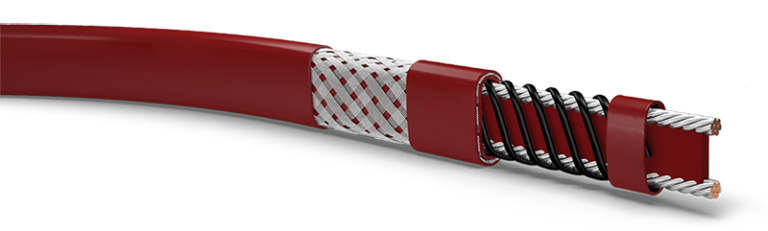
A self-regulating cable has two parallel bus wires with a conductive polymer core between them. As the pipe cools, the polymer contracts and more conductive paths form, so the cable delivers more heat. As the temperature rises, the polymer expands, resistance increases and output drops. This lets a self-regulating heating cable adjust its output along the entire length of the pipe on its own - it heats harder at a cold valve and less on a section that is already warm.
- Does not overheat - it can be crossed and overlapped at valves, flanges and pumps.
- Cut to length on site - it is a parallel circuit, so the cable is cut to the route without changing its output per metre.
- Lower energy consumption than a constant wattage cable, because output falls automatically as the temperature rises.
When to choose self-regulating and when another heating cable?
Self-regulating cables are the first choice for frost protection of pipework and tanks and for maintaining low and medium process temperatures. For higher maintain temperatures, steam purging or very long circuits we select power-limiting heating cables, constant wattage heating cables or series mineral insulated (MI) heating cables. The choice depends on the maintain and exposure temperatures, route length, pipe material and the hazardous area classification.
How we select a self-regulating cable for your installation
- Maintain temperature and minimum ambient temperature - together with the insulation, they give us the pipe heat loss (W/m).
- Pipe diameter, material and insulation - plastic pipes need a cable with a lower sheath temperature and aluminium tape.
- Maximum exposure temperature - e.g. during steam cleaning, it determines the cable family (BTV, QTVR, XTVR, HTV).
- Hazardous area - in Ex areas we use cables and accessories certified to ATEX/IECEx.
- Circuit length and power supply - a self-regulating cable draws inrush current on a cold start, so we size the circuit protection and split the system into circuits accordingly.
You can run a preliminary selection in our heating cable calculator. We will prepare a complete selection with accessories, a thermostat or controller based on your installation data.
Where we use self-regulating heating cables
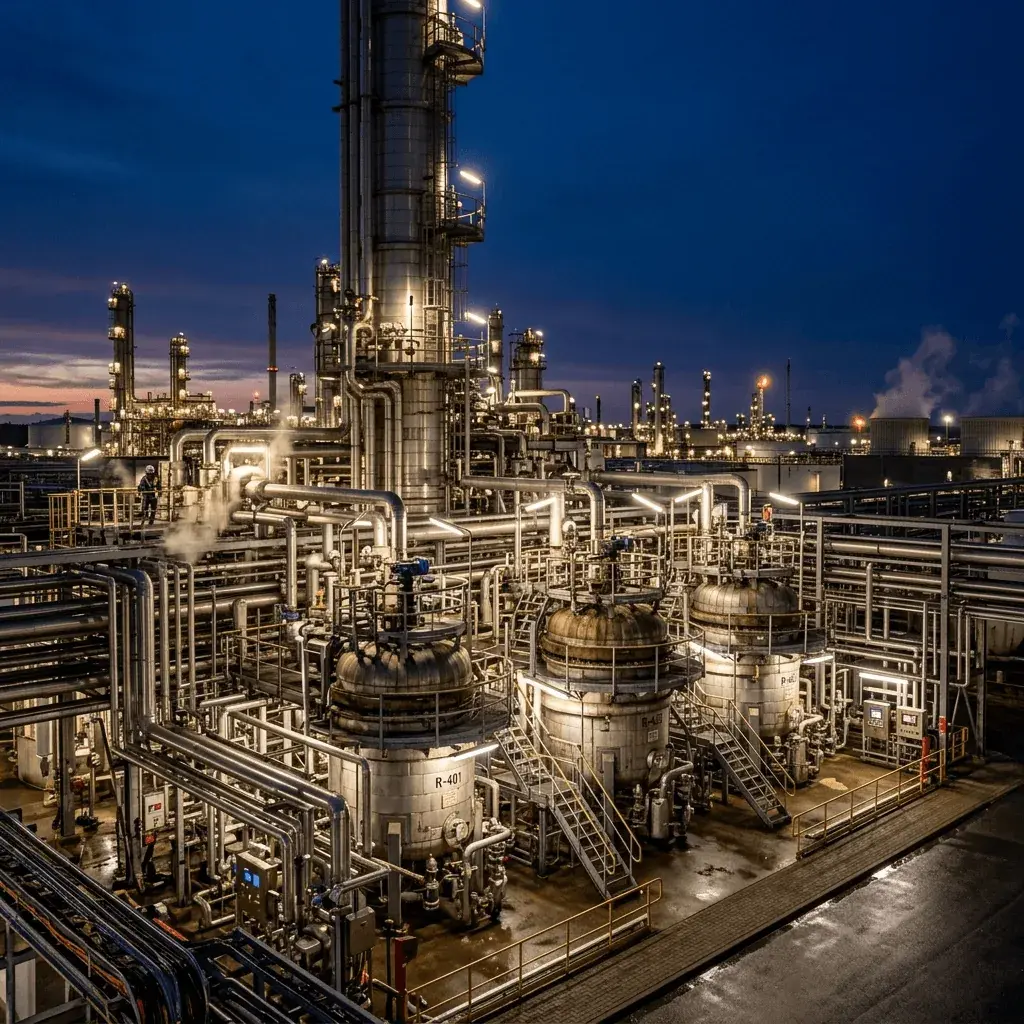
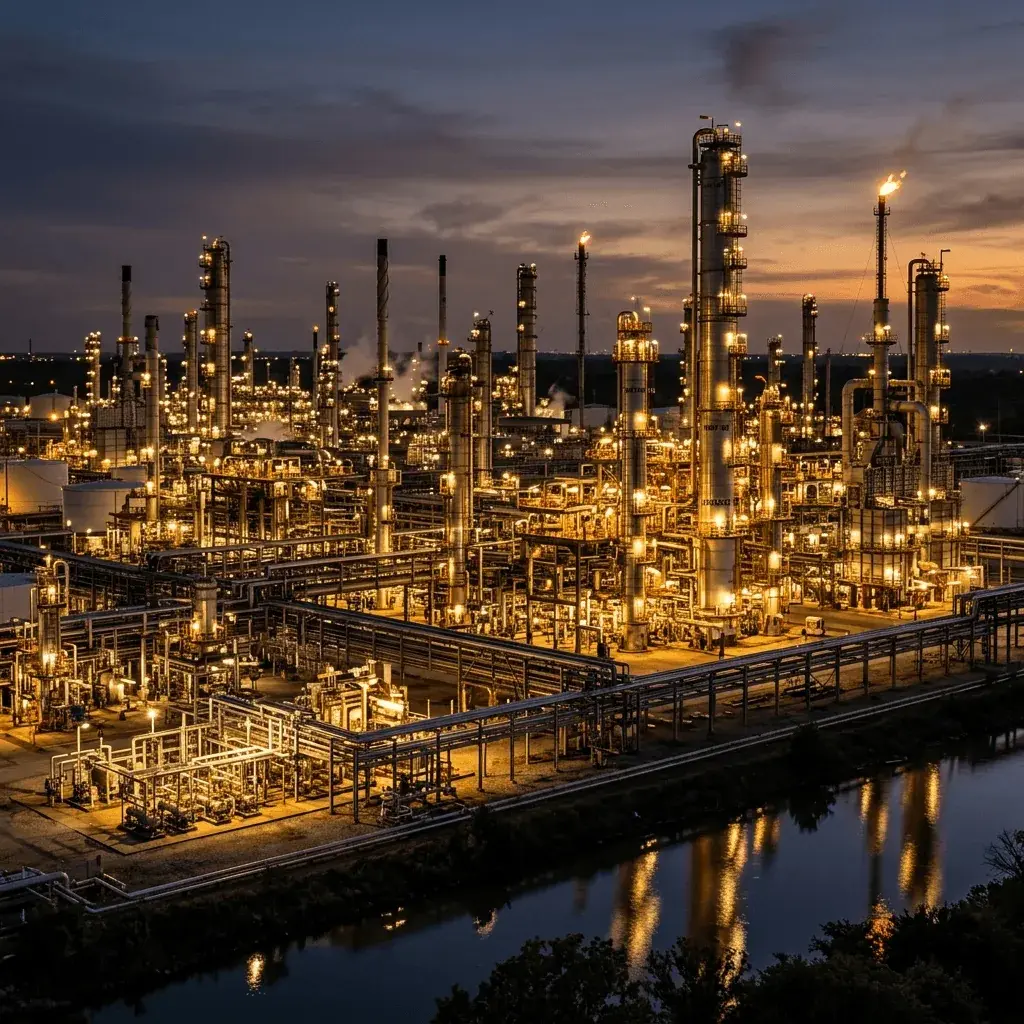
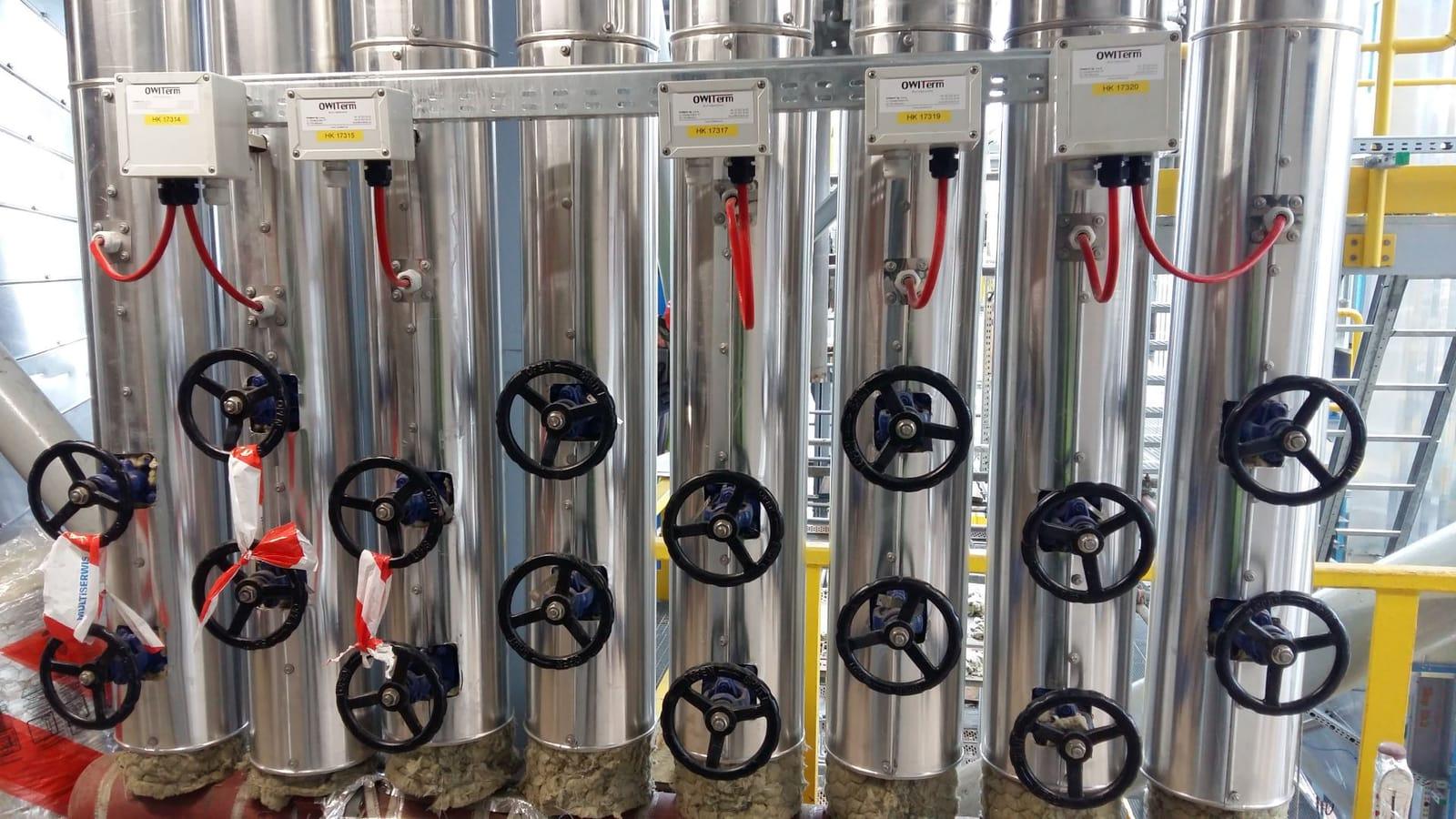
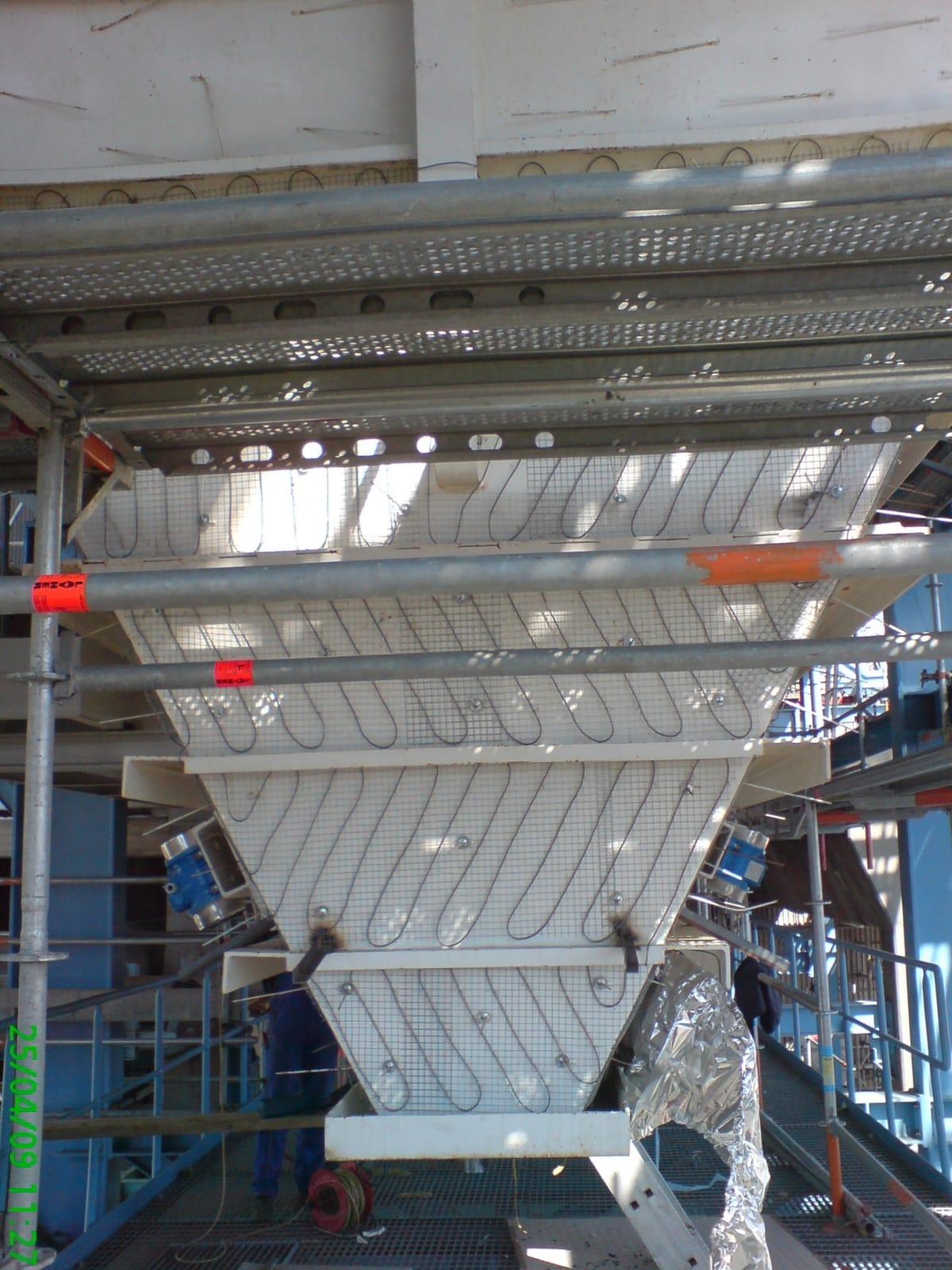
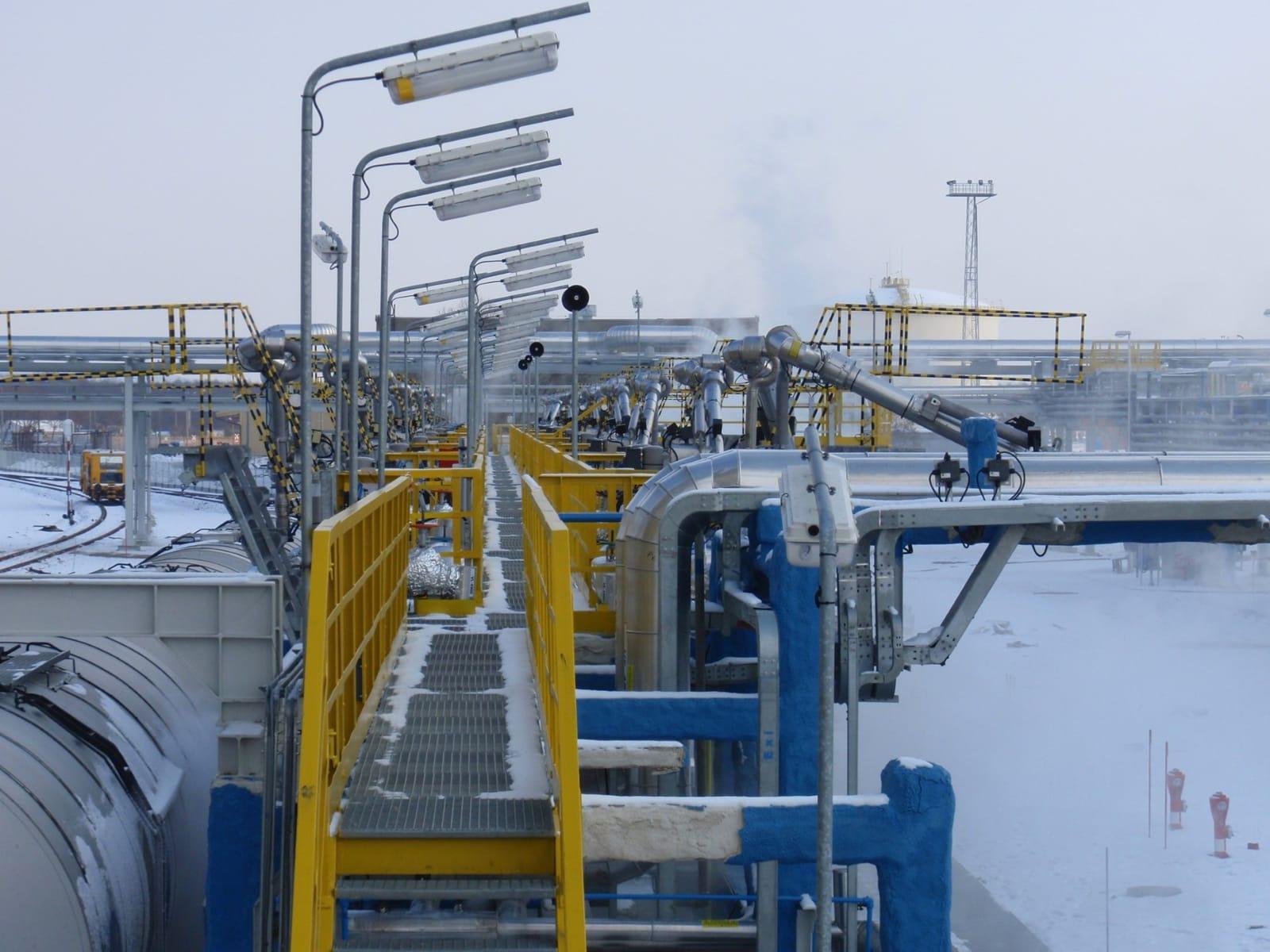
- Industrial pipe heat tracing - frost protection and process temperature maintenance.
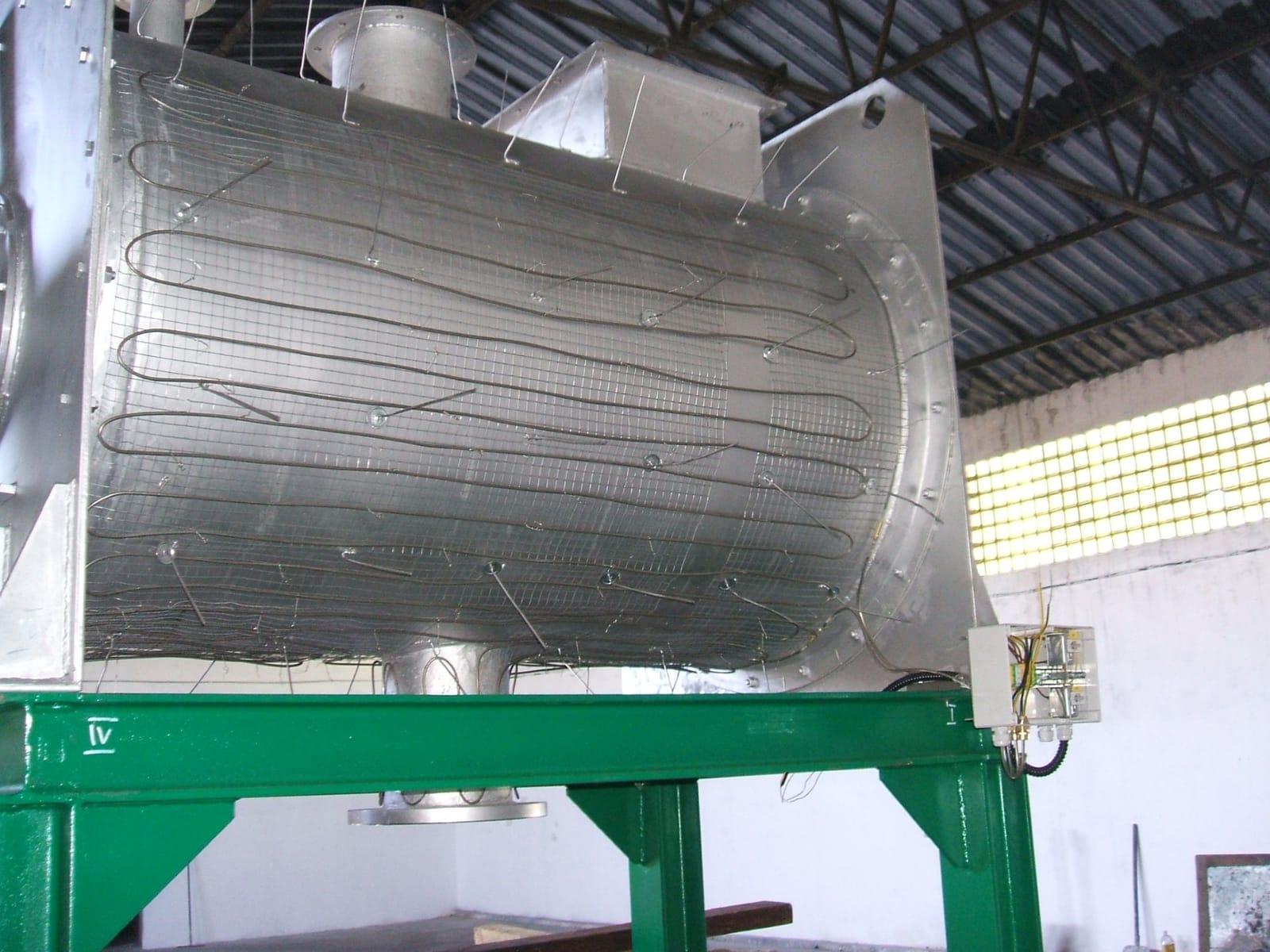
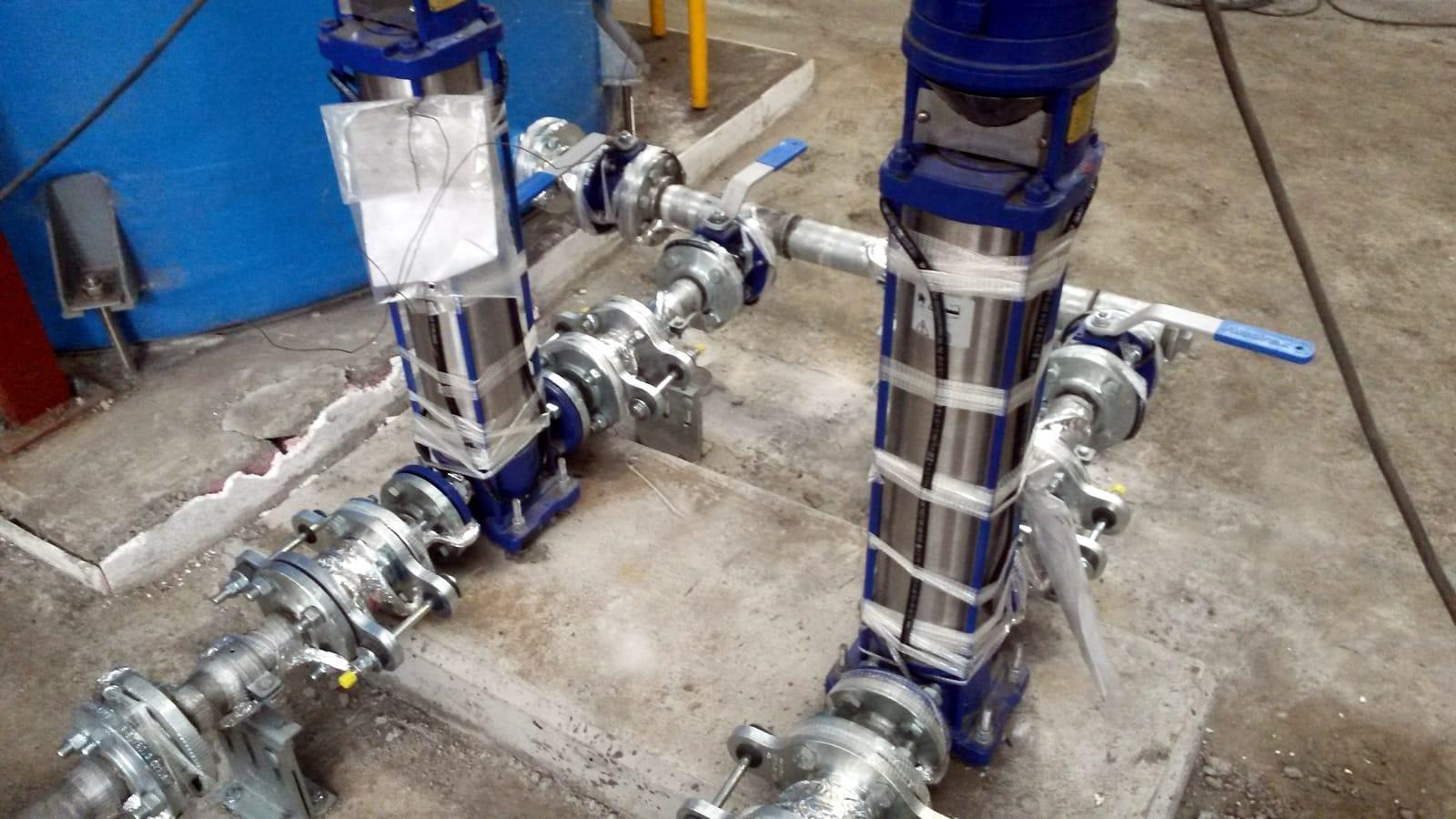
- Tank heating and pump heating.
- Heating of instrumentation (I&C) and impulse lines.
- Roof and gutter de-icing on industrial halls and commercial buildings.
We do not stop at supplying the cable: we select the system, design the circuits and controls, supply Raychem (Chemelex) materials, install them on site, commission the system and hand over the as-built documentation.
Not sure which heating cable to choose?
Tell us about your installation: the medium, pipe diameter and length, maintain temperature and operating conditions. We will select the cable, output and installation method and, if needed, prepare the design.
Frequently asked questions
Can you help me select a self-regulating cable for my installation?
+
Yes. We will select the right heating cable (self-regulating cable) based on your installation parameters - pipe diameter and type, insulation, required maintain temperature and minimum ambient temperature. We will prepare the selection, a bill of accessories and a quotation.
Do you only supply materials, or do you also handle design and installation?
+
We deliver projects end to end: from consultancy and design, through supply of cables and accessories, to installation and commissioning. If needed, we can also take on a selected stage only - for example supply with technical selection.
Can you handle the whole project under one roof?
+
Yes. We take the project from concept to commissioning, with a single point of responsibility. As an authorised Raychem (Chemelex) partner we supply proven components and take responsibility for the consistency of the whole system.
Can a self-regulating cable be cut to any length?
+
Yes. A self-regulating cable is a parallel circuit, so it is cut on site to the route length without changing its output per metre. You only need to stay within the maximum circuit length for the given cable family and circuit protection, and terminate the cable with the correct power connection kit and end seal.
Does a self-regulating cable need a thermostat?
+
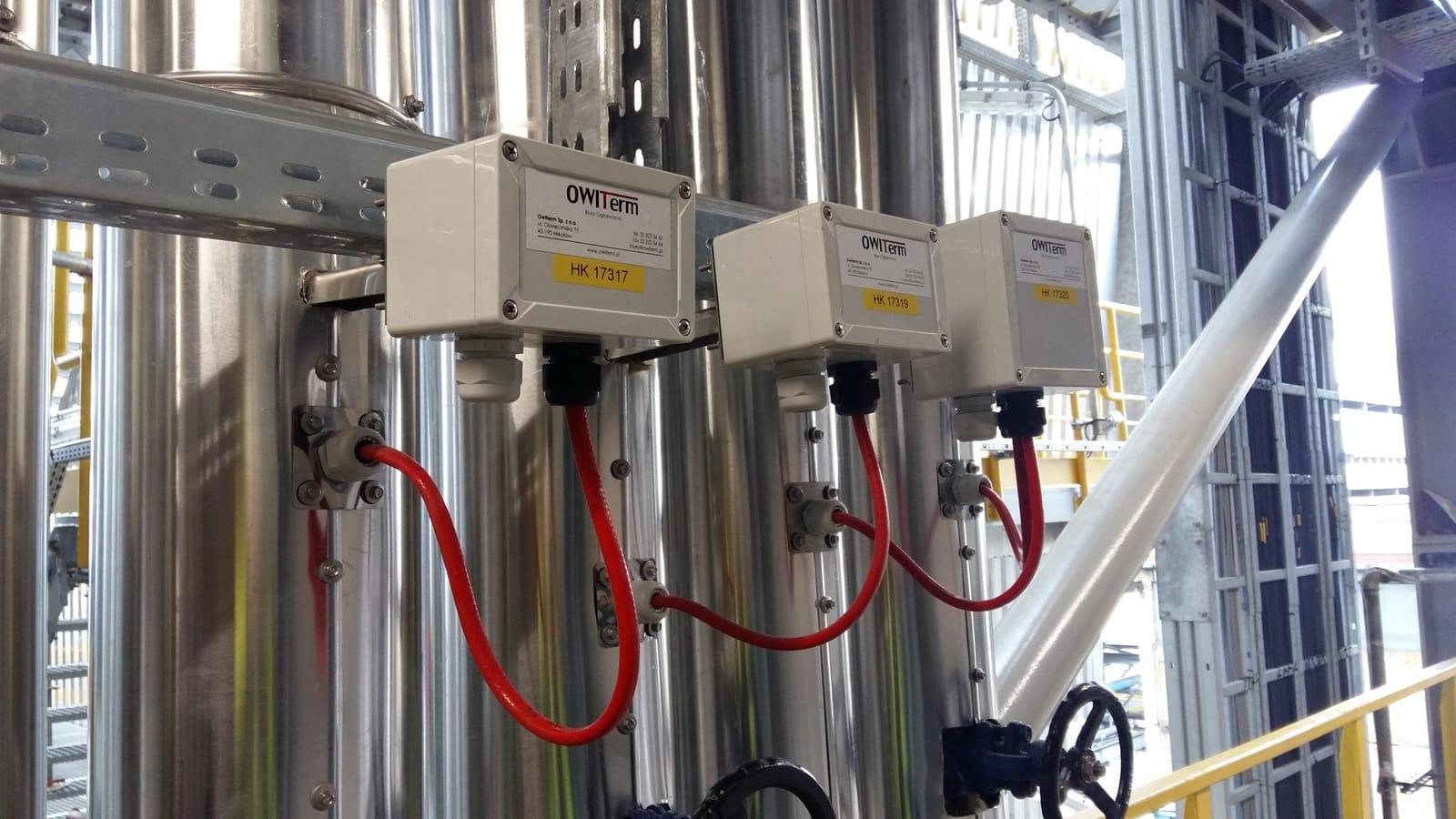
A self-regulating cable limits its own output, but we still recommend a thermostat or controller: it switches the heating off when it is not needed, which noticeably reduces energy consumption. In some Ex area applications temperature control is required. We select the thermostat together with the cable.
How does a self-regulating heating cable work?
+
There is a conductive polymer core between the two bus wires. When the temperature falls, the polymer conducts better and the cable delivers more heat; when it rises, resistance increases and output drops. This way the cable matches its output to conditions along the whole pipe and does not overheat.