
Industrial pipe heat tracing
Keep your process running reliably with professionally engineered heat tracing. We use advanced self-regulating heating cables and precise thermostats that fully protect pipework against freezing and heat loss in any conditions.
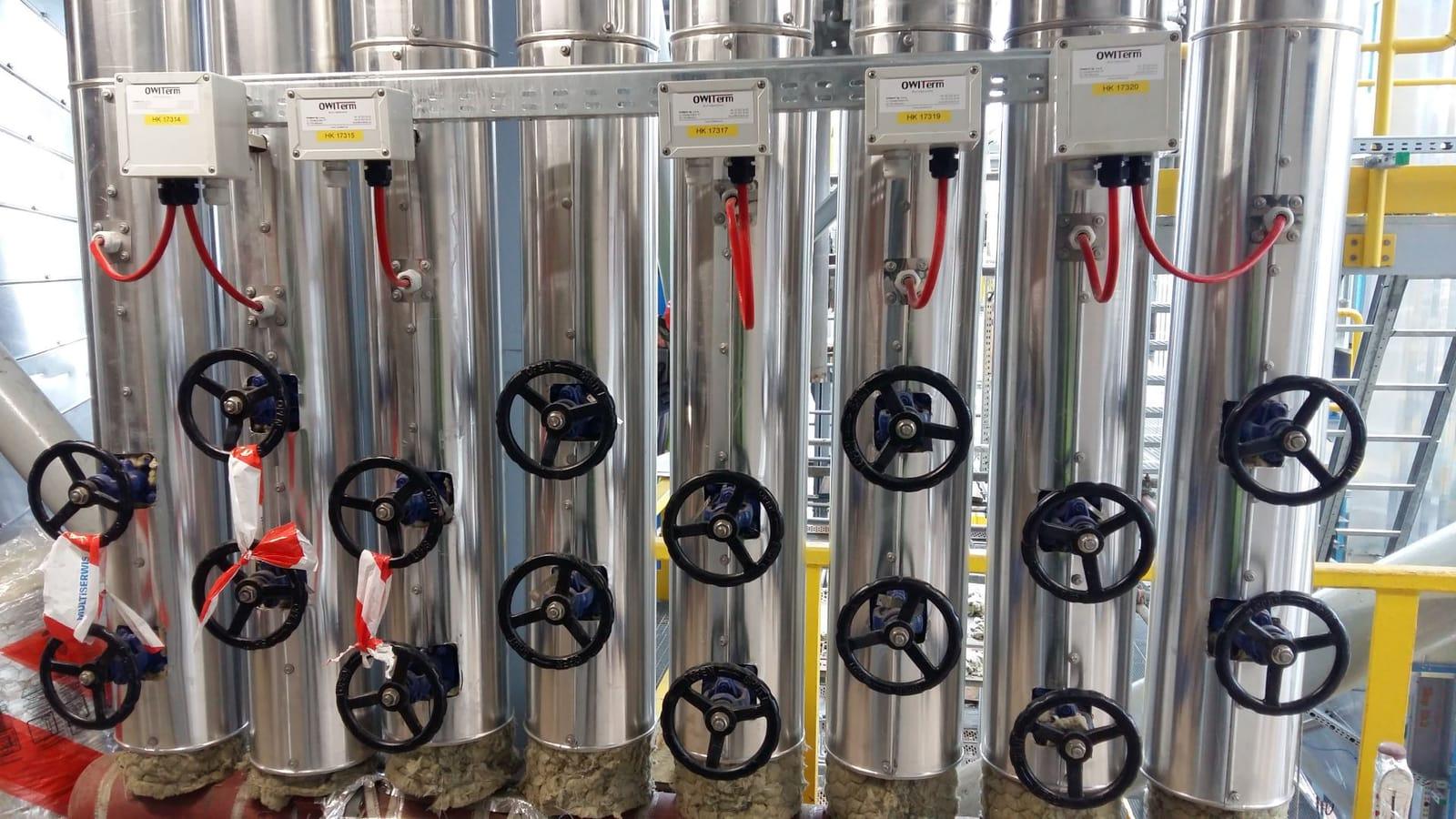
Freeze protection and process temperature maintenance.
From design to commissioning
Design
Heat loss calculations and selection of the complete system.
Supply
Heating cables, controls and matching accessories.
Installation
On-site installation in line with the design.
Commissioning
Testing, configuration and as-built documentation.
What pipe heat tracing does and why it matters
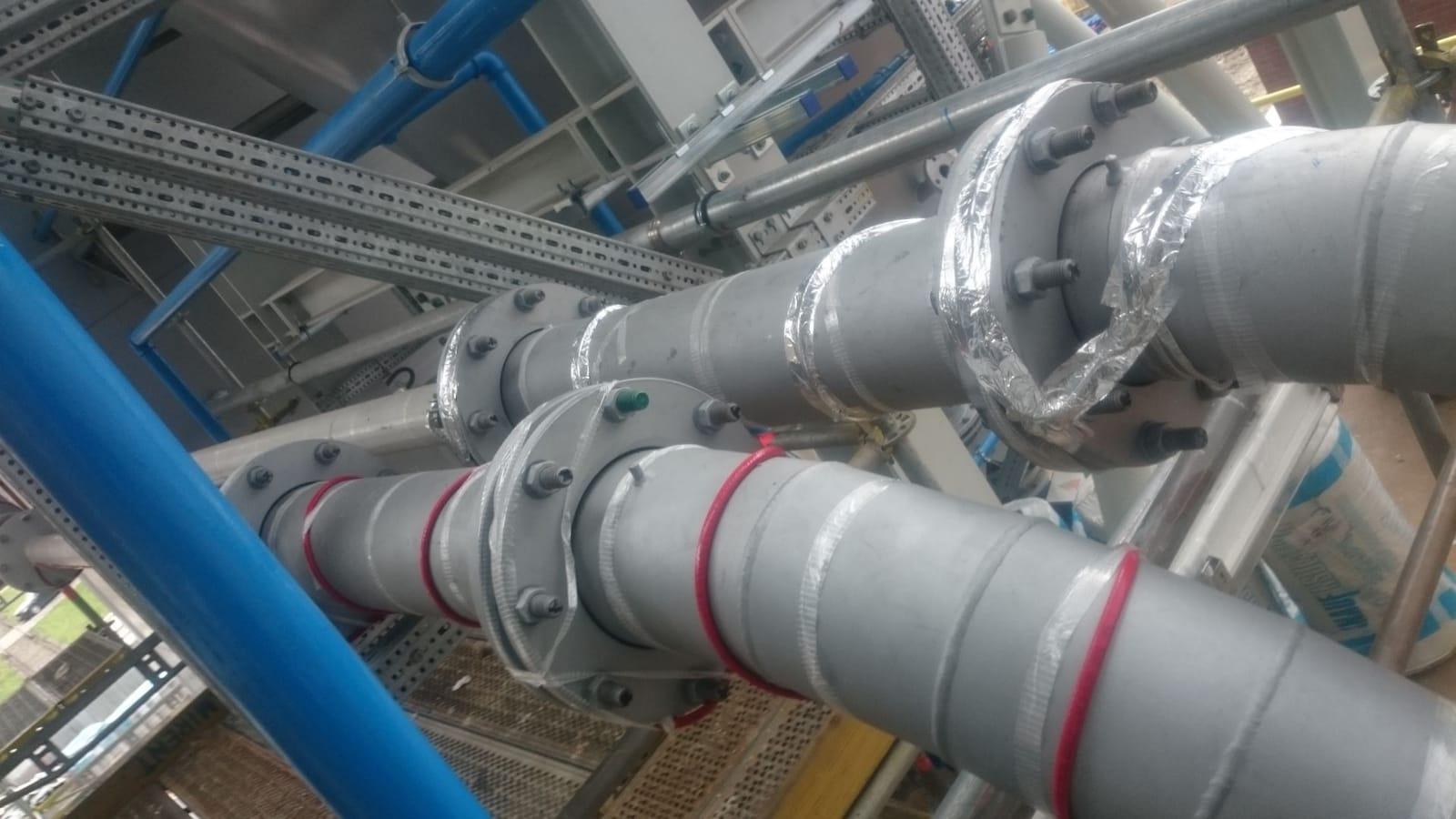
Electric heat tracing protects pipelines against freezing and maintains the required process temperature of the media they carry. A heating cable run along the pipe compensates for heat lost through the thermal insulation, so the medium never cools below a safe level, even in severe frost.
It is the right solution wherever a drop in temperature would cause a liquid to solidify, crystallise or become too viscous - from water and utility media, through oils, fats and chemicals, to heavy fuels and sulphur:
- Freeze protection: water supply, sprinkler and hydrant systems, drainage and process water pipelines.
- Process temperature maintenance: stable temperatures for media sensitive to cooling - hot water, fats, heavy fuel oil, chemicals and condensate.
- Preventing crystallisation and solidification: keeping substances fluid that thicken or crystallise at lower temperatures.
- Fewer failures and less downtime: no burst pipes, ice plugs or production stoppages.
Freeze protection for pipelines
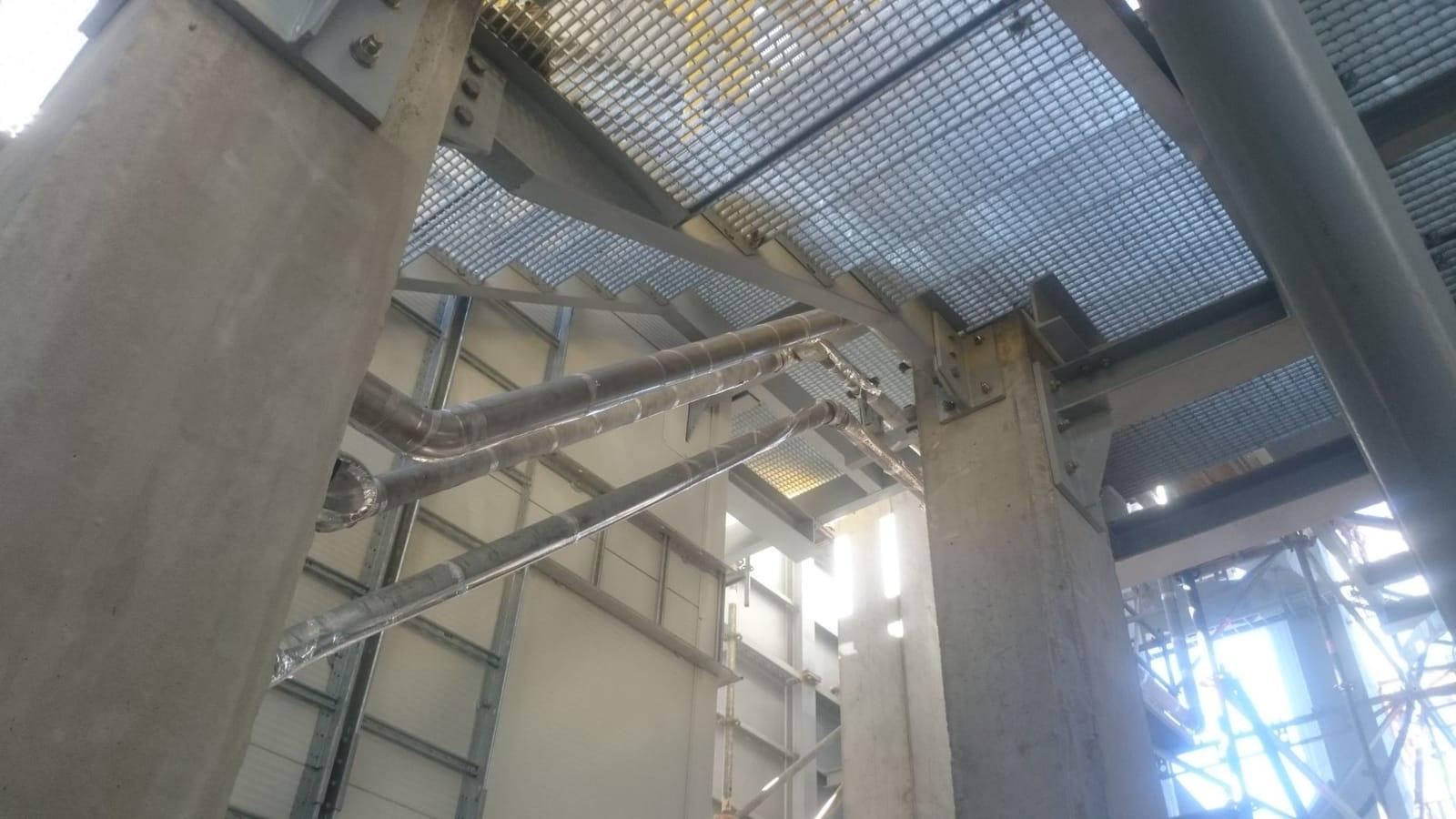
Thermal insulation on its own only slows down cooling - when flow stops for a longer period in hard frost, the water in the pipe will freeze anyway. Electric heat tracing replaces the heat lost through the insulation and keeps the medium above zero all winter long.
- Fire water, sprinklers and hydrants: systems that must always work, including after long periods without flow.
- Process and cooling water: outdoor runs, pipe racks, wall penetrations and unheated buildings.
- Critical points: valves, flanges, supports, drains and vents - this is where heat loss is highest and where ice plugs most often form.
We do not offer thermal insulation as a stand-alone service, but on request we install it together with the heat tracing as part of a single turnkey contract.
Heat tracing for plastic pipes (PE, PP, PVC)
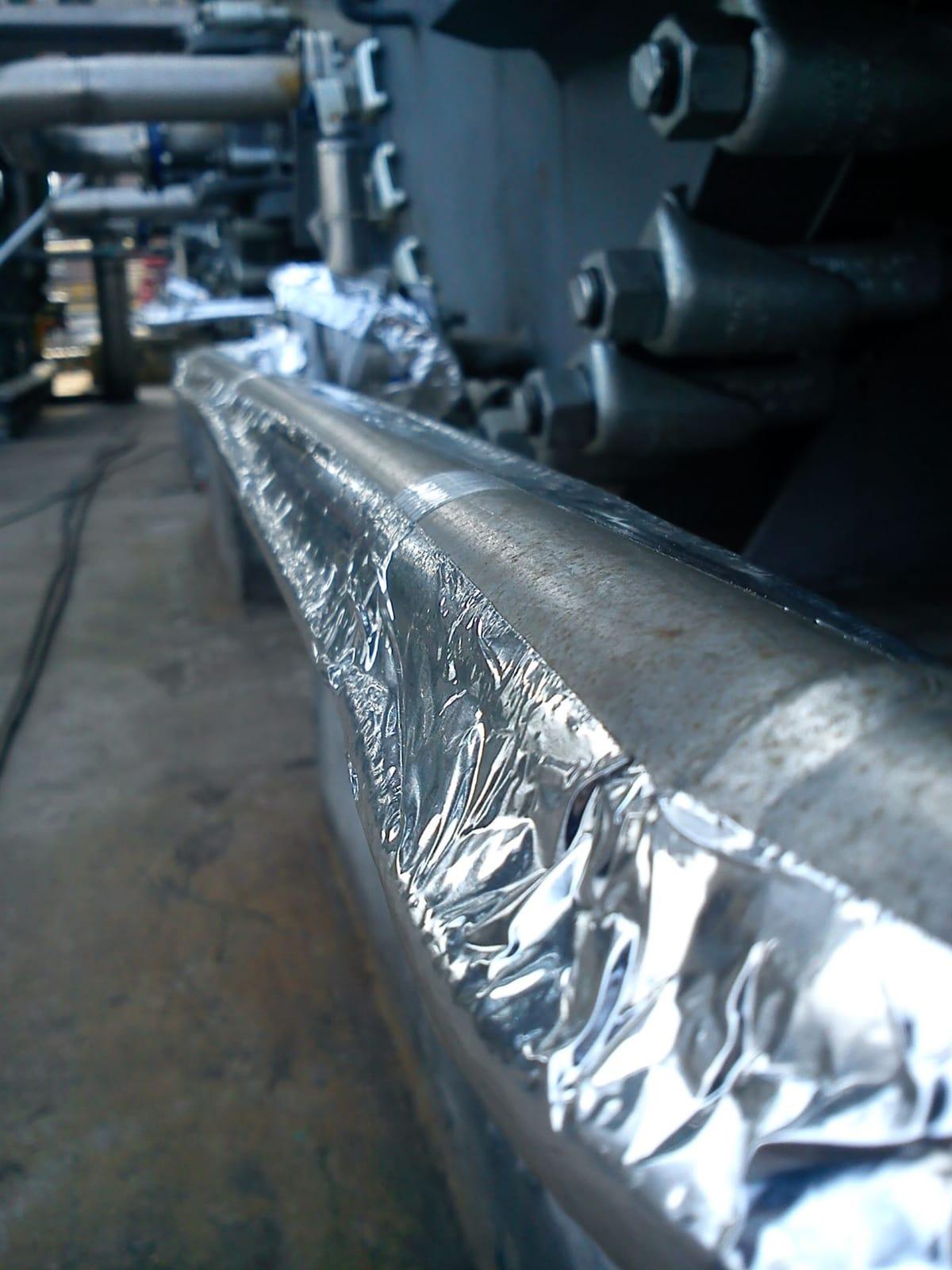
Plastic pipes conduct heat poorly and have limited temperature resistance, so the design differs from steel pipework. We use cables with a suitably low sheath temperature and spread the heat around the pipe circumference with aluminium tape applied under the cable. Power output and installation method are selected so that the permitted temperature of the pipe material is never exceeded.
Media we keep at temperature in pipelines
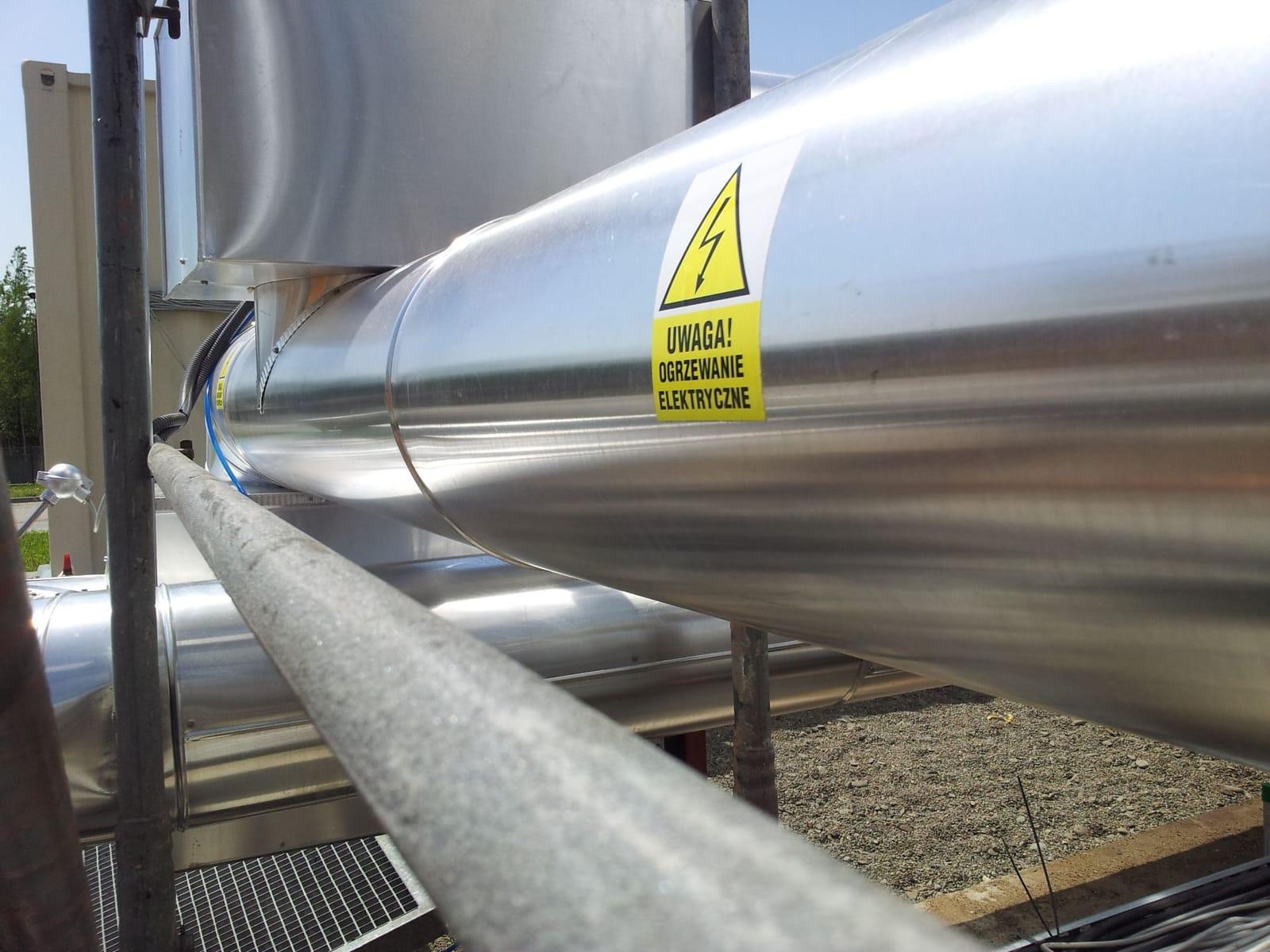
- Fire water, sprinklers and hydrants - systems that must be operational at all times, including after long periods without flow. Freeze protection with self-regulating heating cable, control and fault alarm.
- Heavy fuel oil and heating oils - maintaining the temperature at which the fuel keeps the viscosity needed for pumping and combustion (power generation, district heating, cement plants).
- Liquid sulphur - holding the temperature within a narrow window, outside of which sulphur solidifies or thickens rapidly; usually with series MI cables or power-limiting cables.
- Asphalt and bitumen - high maintain temperatures, using mineral insulated (MI) cables.
- Crude oil, petroleum products and fuels - refineries and terminals, with versions for Ex hazardous areas.
- Chemicals - protection against crystallisation and rising viscosity, with materials resistant to aggressive media.
- Food-grade media - fats, chocolate, syrups, glucose: a stable temperature without overheating the product.
- Process water, cooling water and condensate - outdoor runs, pipe racks and unheated buildings.
Heat tracing for valves, fittings and strainers
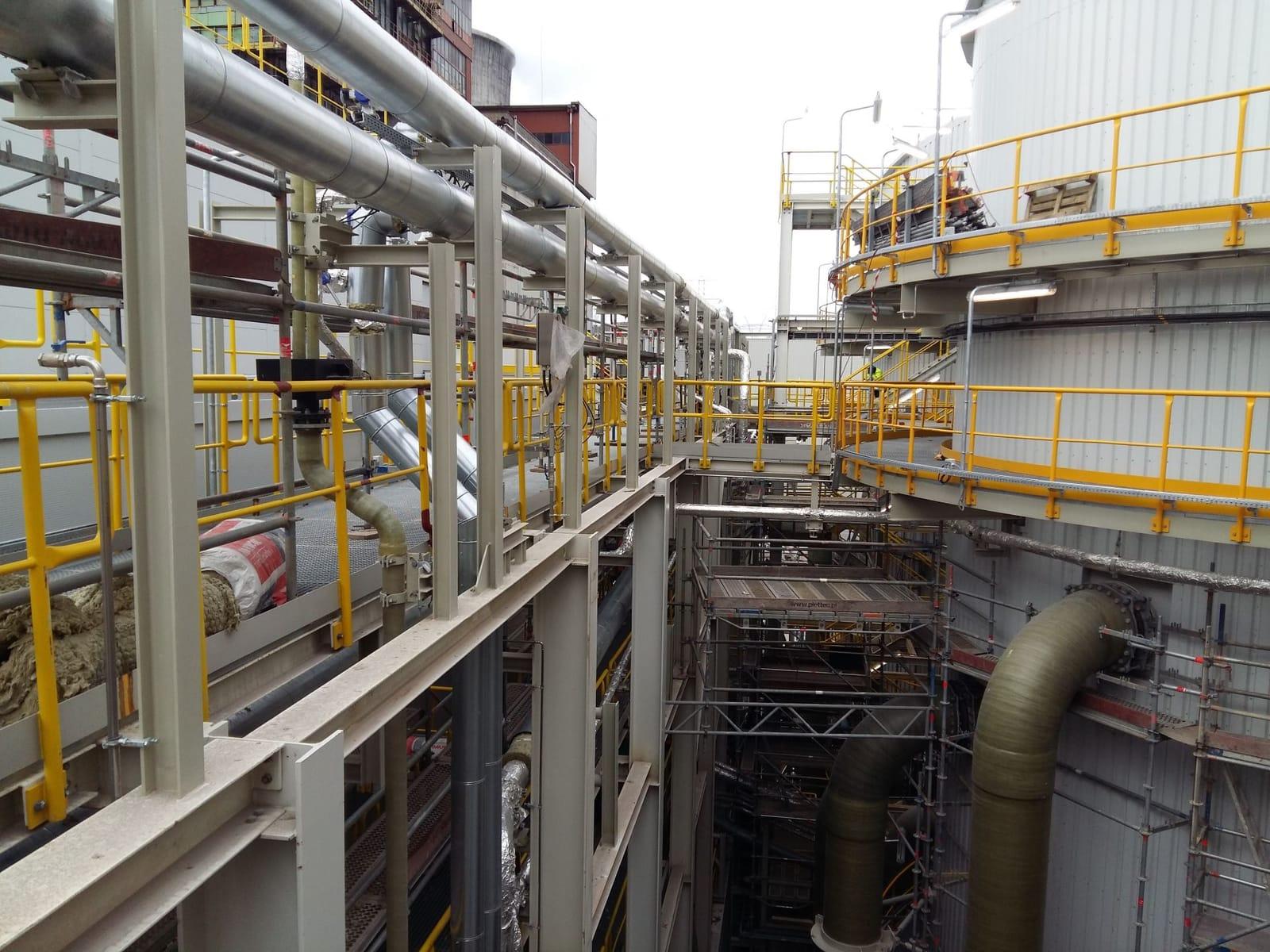
Valves, flanges, strainers and supports lose more heat than a straight run of pipe, and fittings have a greater mass and surface area. That is why we install additional cable length there (loops or spiralling), based on calculated allowances for fittings, and insulate them in a way that still allows the valve to be serviced. Pumps and branches to instrumentation are covered by the heat tracing in the same way.
How we deliver pipe heat tracing - turnkey
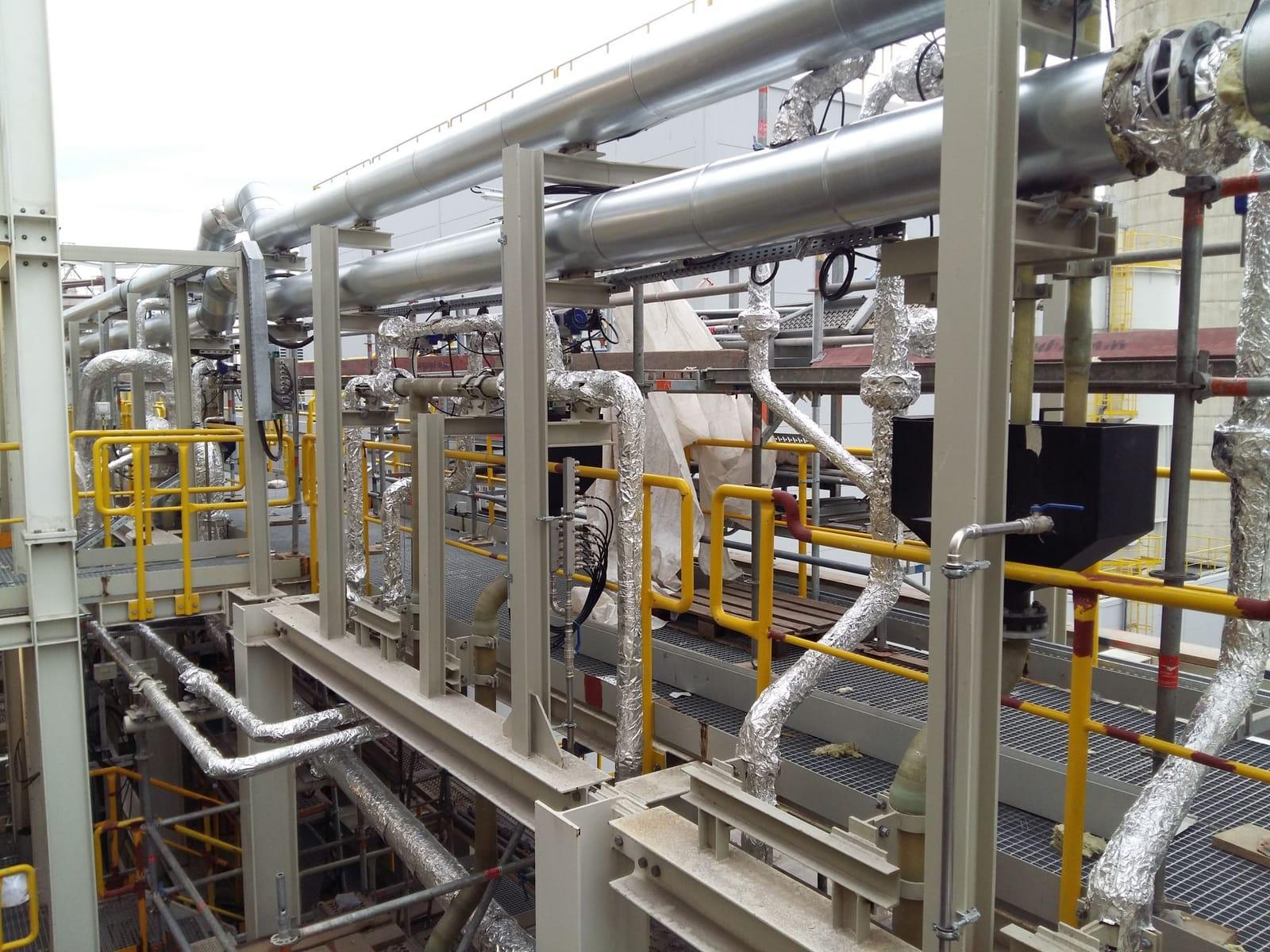
We heat trace your pipeline from start to finish under a single contract - there is no need to coordinate a designer, a supplier and an installation crew separately. We run the project as one contractor, with a single point of responsibility:
- 1Consultancy and engineering selection - we calculate heat losses and select the heating cable type and output for your system parameters.
- 2Design - we prepare the documentation and select accessories, control and solutions for hazardous areas (Ex).
- 3Supply - we deliver cables and components as an authorised Raychem (Chemelex) distributor.
- 4Installation - we install the system on site, including on live plant, to good engineering practice and the requirements of the hazardous area.
- 5Commissioning and testing - we commission the system, carry out measurements, hand over as-built documentation and provide support after completion.
Selecting a heat tracing system - what it depends on
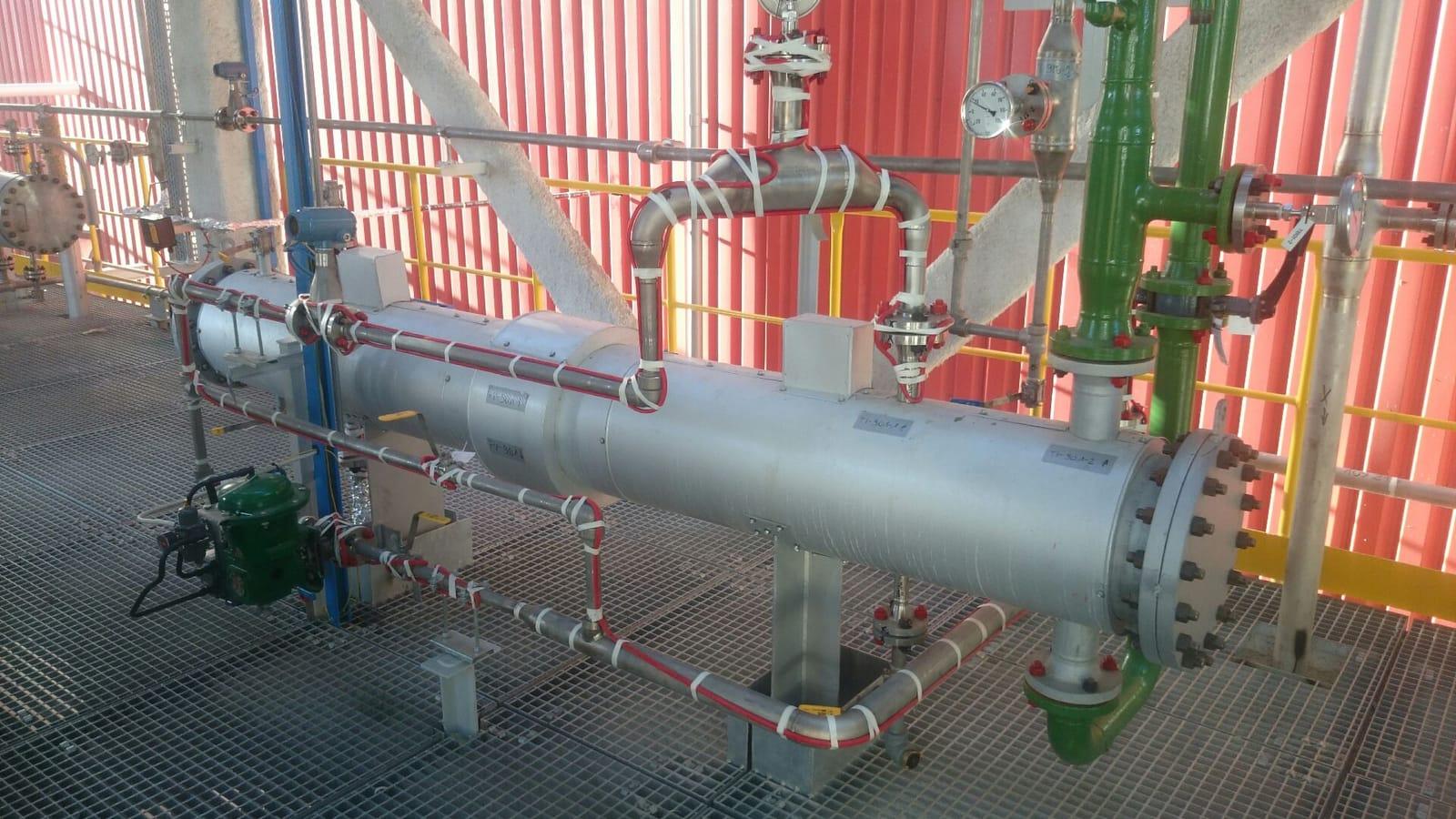
Correct selection is the basis of reliability and optimum operating costs. Among other things, we take into account:
- Pipe diameter and material and the lengths of the runs to be traced.
- Type and thickness of thermal insulation - heat losses depend on it.
- Required maintain temperature and minimum ambient temperature.
- Purpose of the system - freeze protection or process temperature maintenance.
- Area classification - an installation in a hazardous area (Ex) requires certified components.
On this basis we select the right heating cable - self-regulating, constant wattage, power-limiting or series resistance (MI/PI) - and the control method. You can make a preliminary selection yourself with our calculator, and we will verify it and prepare a quotation.
Installation methods and control
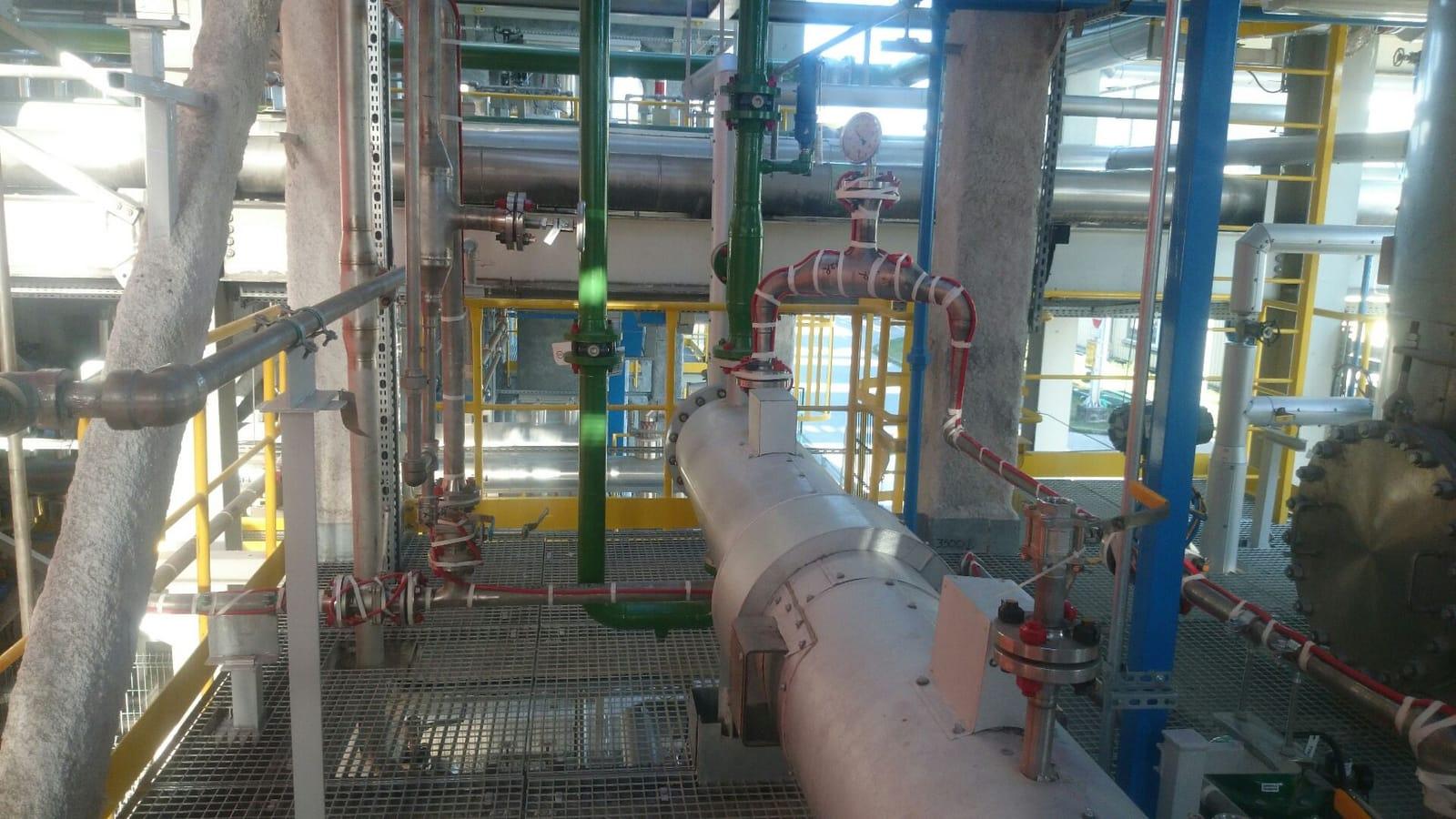
We tailor the system to the site - how the pipes are routed, ambient conditions and process requirements:
- 1External and internal installation: the heating cable is run on the pipe surface or, where justified, inside the pipe.
- 2Above-ground and buried pipework: we cover networks inside buildings and outdoors; heat tracing allows pipes to be laid at a shallower depth, which reduces excavation costs.
- 3Control and monitoring: thermostats and electronic controllers hold the set temperature and let you supervise system operation, while self-regulating technology additionally adjusts output to conditions.
- 4Ex areas: for installations in hazardous areas we select certified cables, temperature limiters and accessories.
Why electric pipe heat tracing
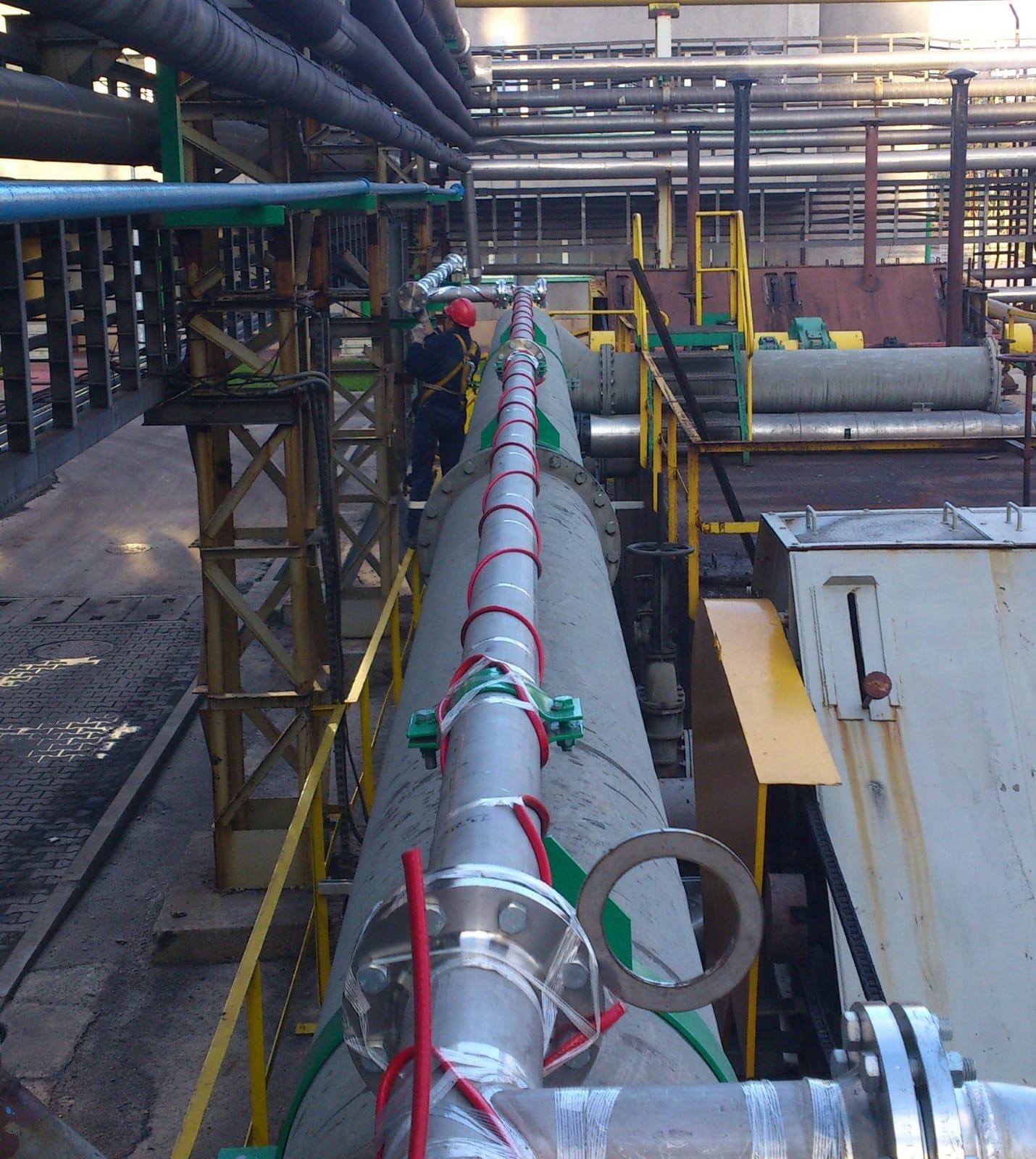
- Continuous operation: media do not thicken or solidify, even at sub-zero temperatures.
- Precision and safety: accurate temperature control and a lower risk of overheating than with steam tracing.
- Energy efficiency: self-regulating systems deliver exactly as much heat as each section needs.
- Simpler operation: no steam system, condensate or steam traps to maintain.
- One contractor: design, supply, installation and commissioning on our side - with a guarantee that the whole system works as one.
Gallery - Pipe heat tracing
Selected installations from our portfolio. Click a photo to enlarge it.
Frequently asked questions
Do you only supply the cable, or do you also design and install pipe heat tracing?
+
We deliver pipe heat tracing as a turnkey service: consultancy and selection, design, supply of cables and accessories, installation and commissioning. We can also take on just a selected stage - for example supply with engineering selection - if you handle the installation yourselves.
How do you size the heat tracing for a pipeline?
+
The required output depends on the pipe diameter and material, the thickness and type of insulation, the required maintain temperature and the minimum ambient temperature. From these we calculate the heat losses and select the heating cable type and output. You can make a preliminary selection with our calculator, and we will verify it and prepare a quotation.
Do you heat trace pipelines in hazardous areas (Ex)?
+
Yes. In Ex areas we use heating cables and accessories with the appropriate certification (ATEX/IECEx) together with temperature limiters, and we install them in line with the requirements of the specific zone. We carry out such projects in petrochemicals and the chemical industry, among others.
How much does pipe heat tracing cost?
+
The cost depends on the length and diameter of the pipeline, the required temperature, the cable type and the scope of work (supply only, or design and installation as well). Once you send us the basic system parameters, we will prepare an engineering selection and a tailored quotation.
Is electric pipe heat tracing energy efficient?
+
Yes. Systems with self-regulating cables deliver as much heat as each section needs - output increases as the temperature falls and decreases as it rises. Combined with thermostats and controllers, this reduces energy consumption compared with uncontrolled constant wattage systems.
Does installation require the pipeline to be taken out of service?
+
Usually not - the heating cable is installed on the outside of the pipe, under the insulation, so in many cases we work on live plant. We agree the scope and schedule individually to minimise the impact on your operations.
Is the heating cable installed under the pipe insulation?
+
Yes. The heating cable is laid directly on the pipe (straight or spiralled), fixed with tape and then covered with thermal insulation. The insulation limits heat loss and the cable makes up for it - without insulation, heat tracing would be ineffective.
How much electricity does pipe heat tracing use?
+
Consumption depends on the pipe heat loss (W/m), the length of the installation and the operating time. With good insulation and thermostatic control, the system only runs when the temperature drops below the set point. Once we have calculated the heat losses, we give you the installed load and the estimated consumption per season.
Can heat tracing be added to an existing pipeline?
+
In most cases, yes. We remove the insulation, install the cable on the pipe and reinstate the insulation, often without shutting the system down. At the same time we assess the condition of the insulation, because wet insulation significantly increases heat loss.
We will find the right solution
for your installation
We usually prepare quotations within 24 hours. Talk to our specialists - we will advise free of charge and select a heat tracing system that fits your requirements. Enquiries in English are welcome.
- Free technical consultation
- Power output and complete accessory selection
- Backed by 30+ years of experience