
Roof, gutter and downpipe de-icing
Winter puts roof drainage to the test. Ice and snow in gutters block the water flow, damage gutters and facades, and falling icicles endanger people and property - a liability that rests with the building manager. We design and install de-icing systems for industrial halls, warehouses, logistics centres, plants and public buildings.
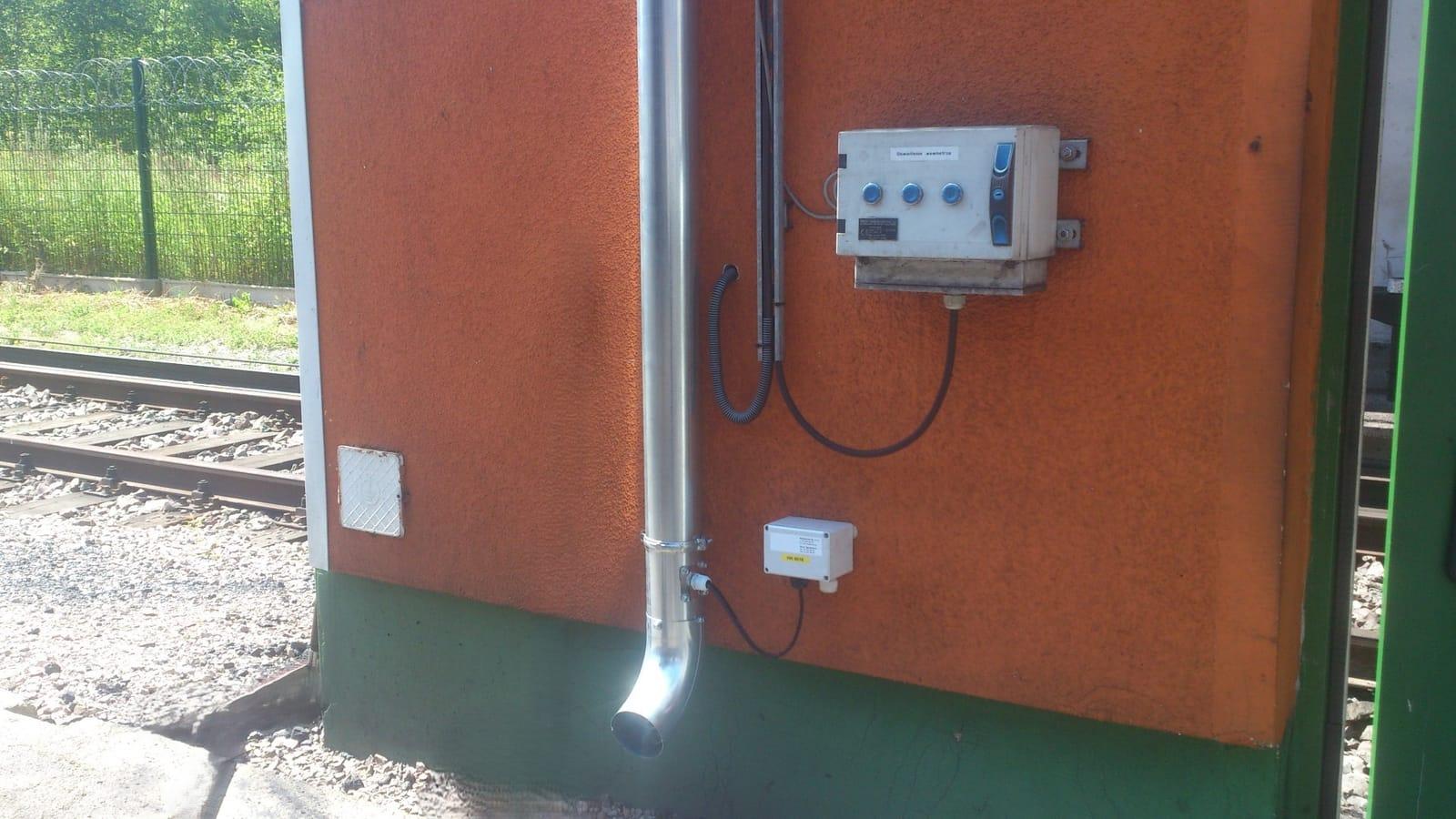
Free drainage and protection of gutters and downpipes.
From design to commissioning
Design
Heat loss calculations and selection of the complete system.
Supply
Heating cables, controls and matching accessories.
Installation
On-site installation in line with the design.
Commissioning
Testing, configuration and as-built documentation.
Why invest in gutter de-icing?
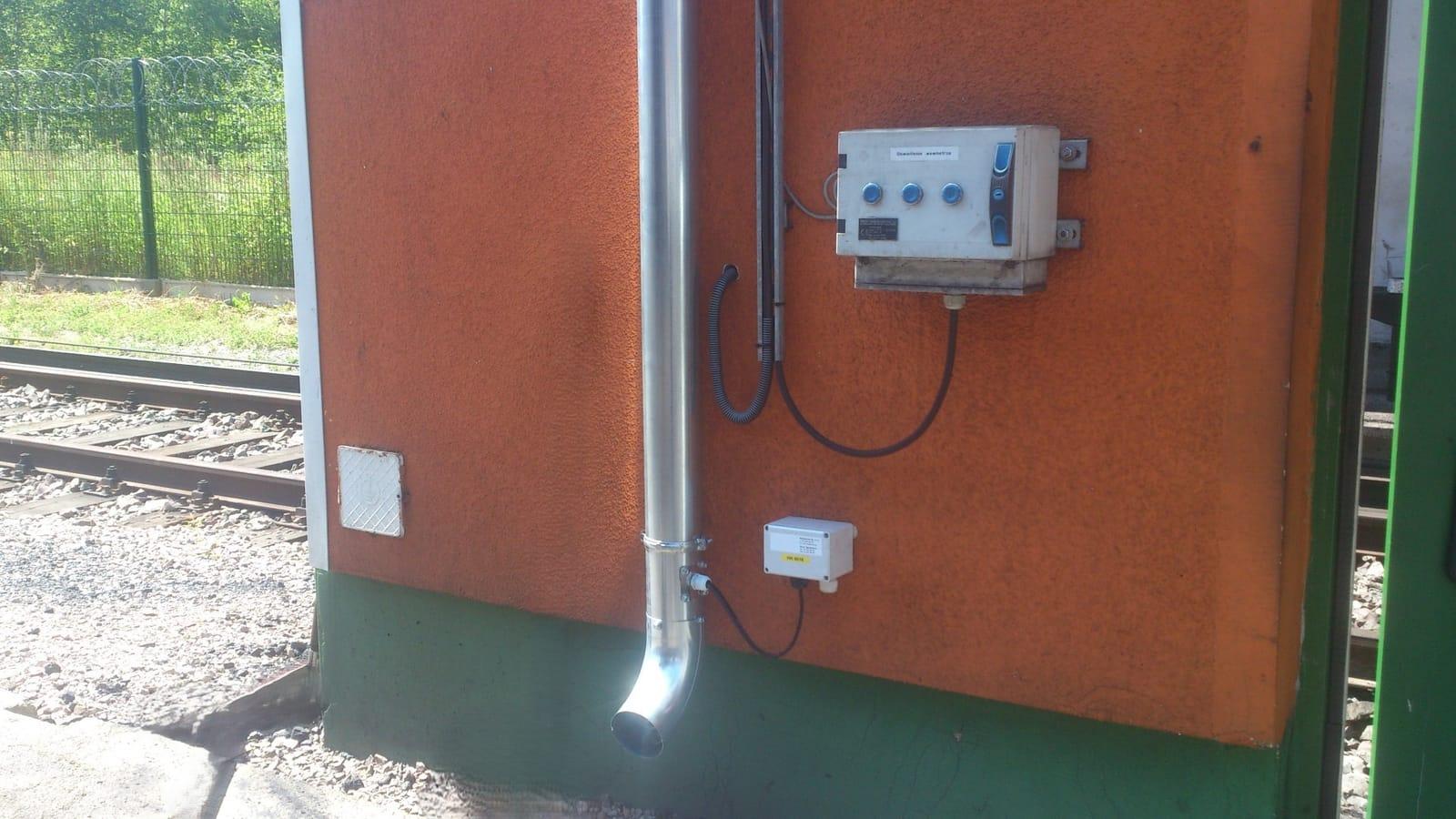
- Protecting facades and foundations: preventing uncontrolled water leaks that lead to damp walls and damaged render.
- Health and safety: eliminating snow overhangs and falling icicles that endanger people and property.
- Longer gutter life: freezing water expands, which often cracks gutters and opens up downpipe joints.
- Clear drainage 24/7: effective removal of snow and ice keeps water draining from every roof slope.
Technology and intelligent control
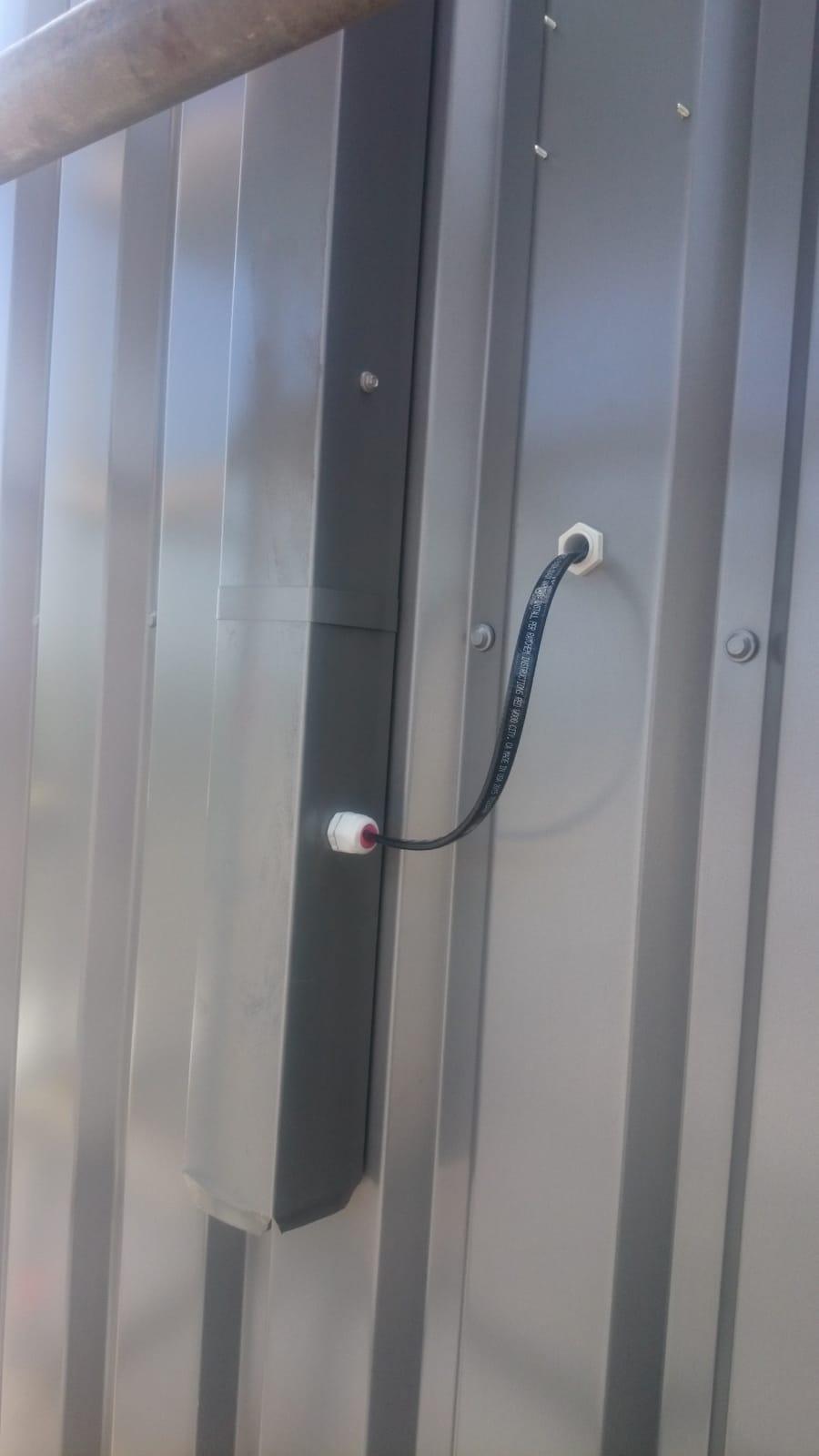
- 1Weather-based control: we use controllers with temperature and moisture sensors. The system only switches on when there is a risk of icing.
- 2Self-regulating cables: technology that adjusts heat output to the ambient temperature - the colder it gets, the more heat the cable delivers.
- 3Easy management: the system can be integrated with a smart building (BMS).
Installation tailored to the roof
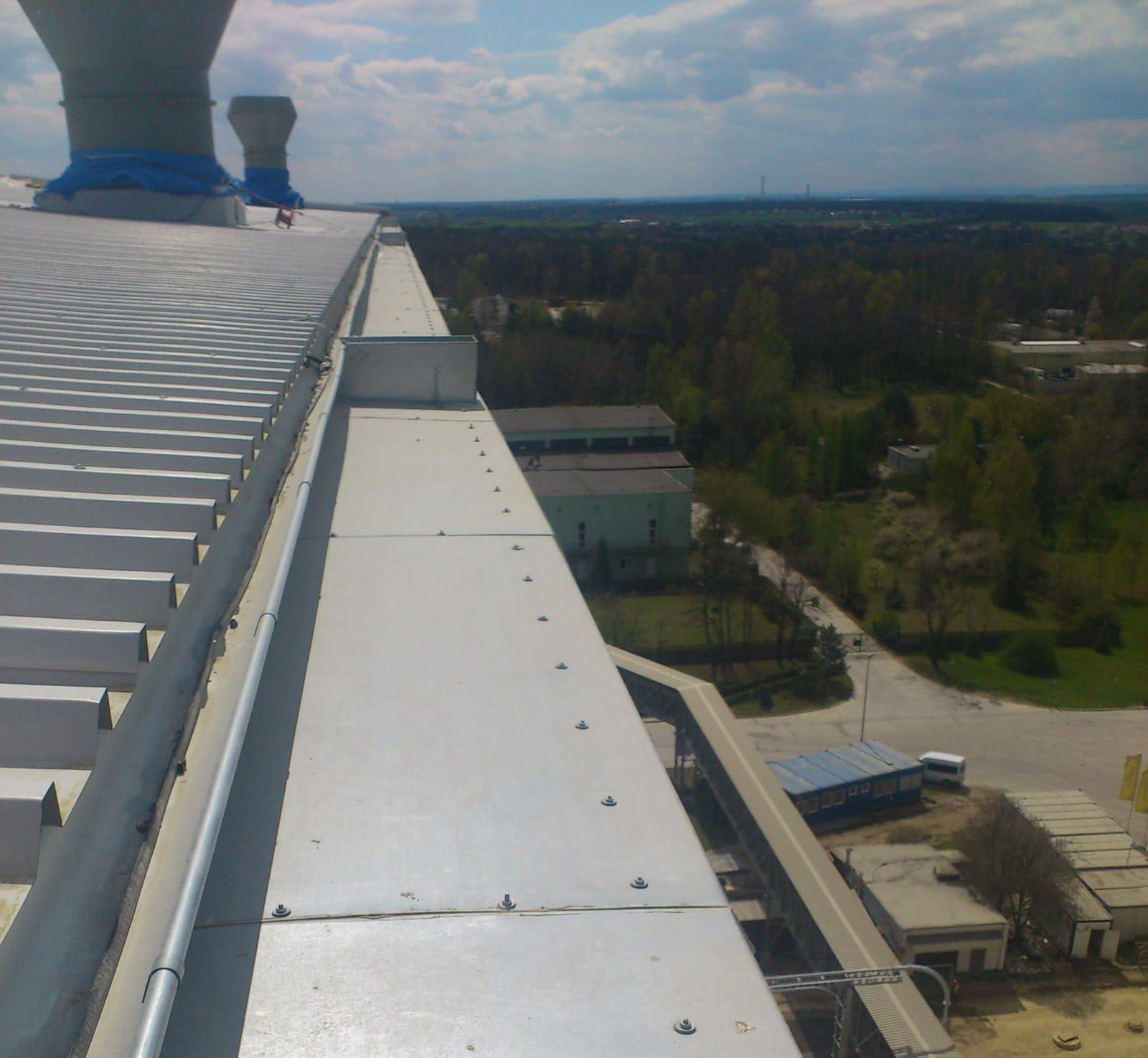
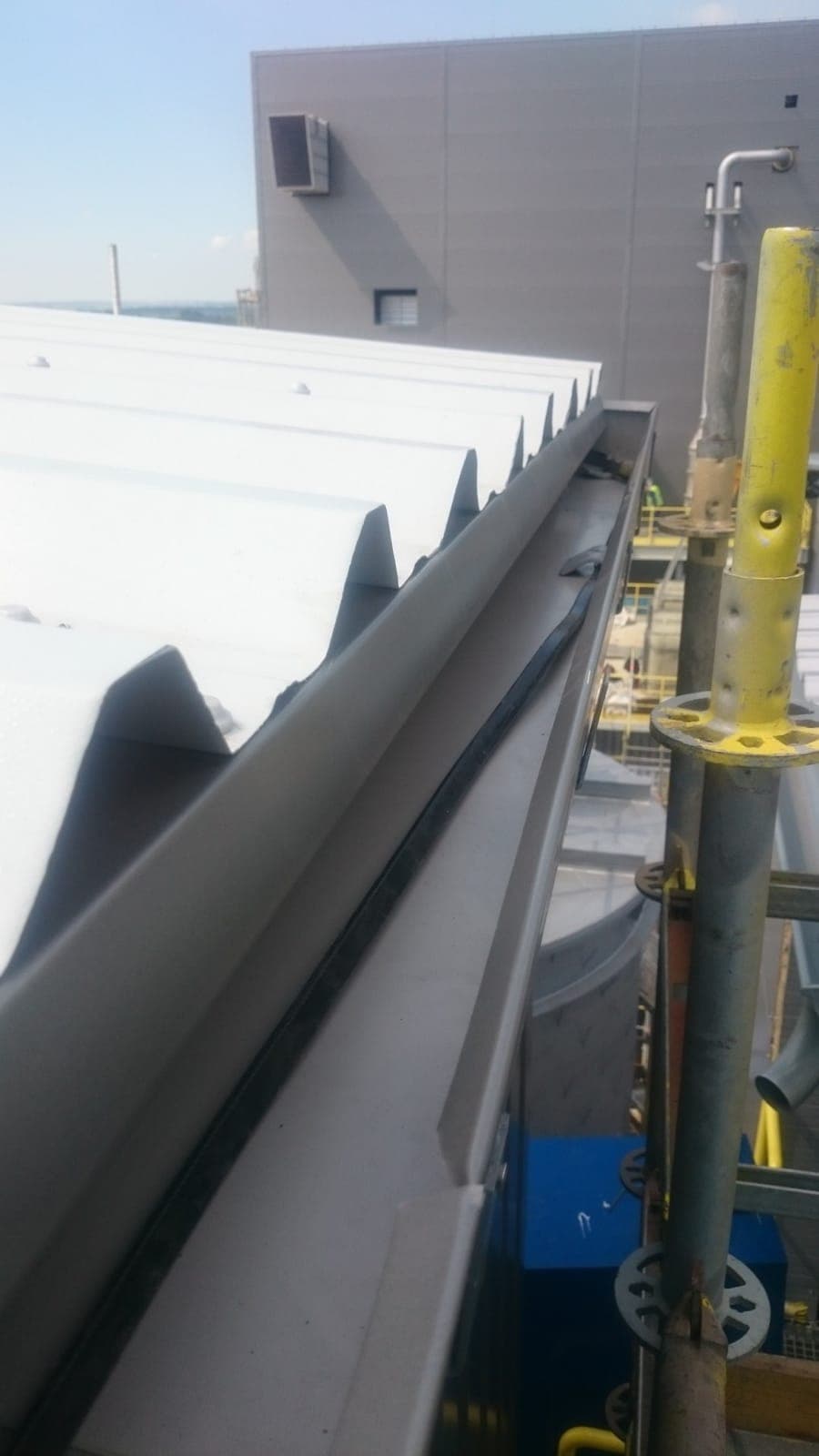
- In gutters: we lay cables lengthwise (single or double run), secured with dedicated UV-resistant clips.
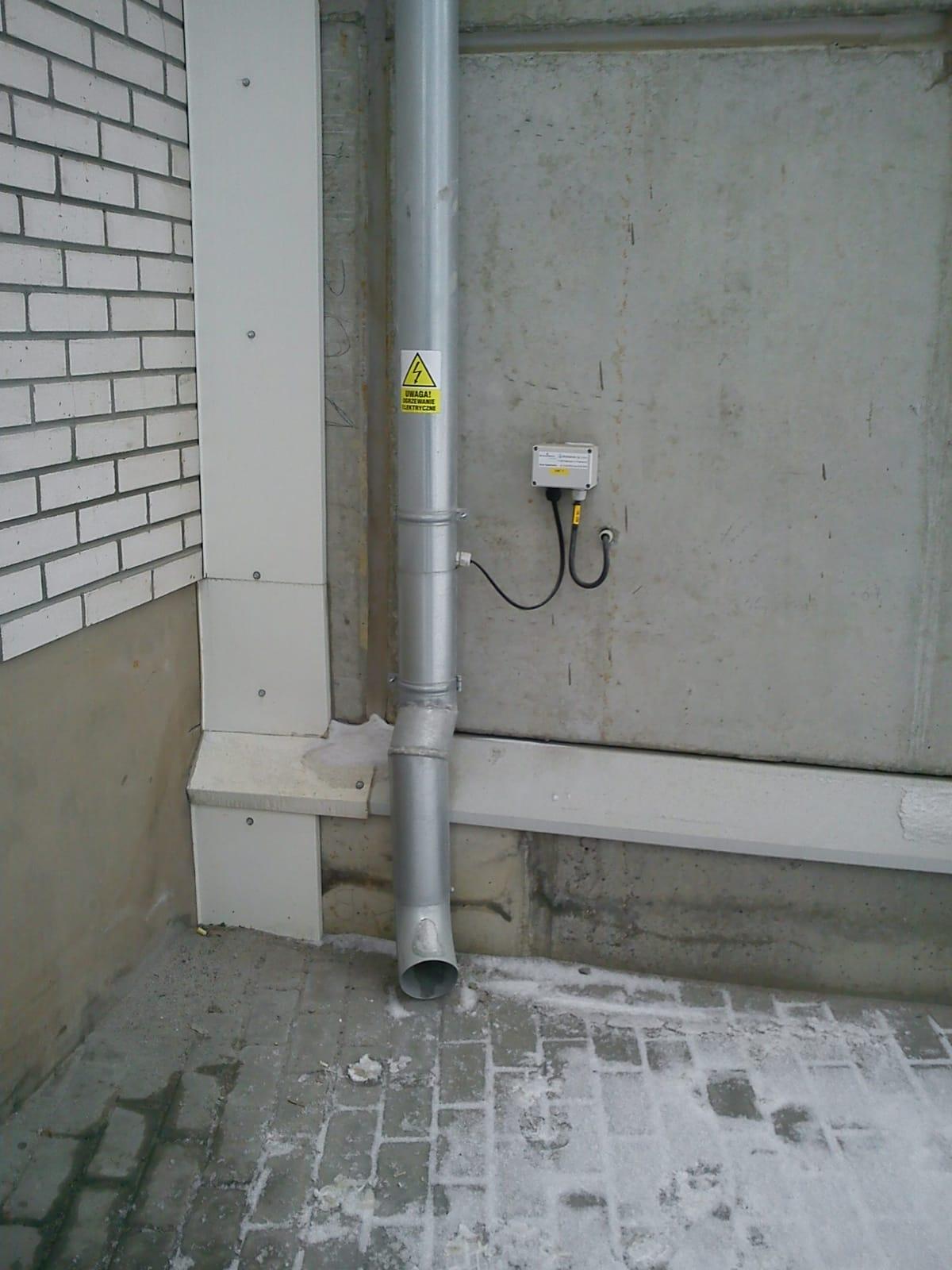
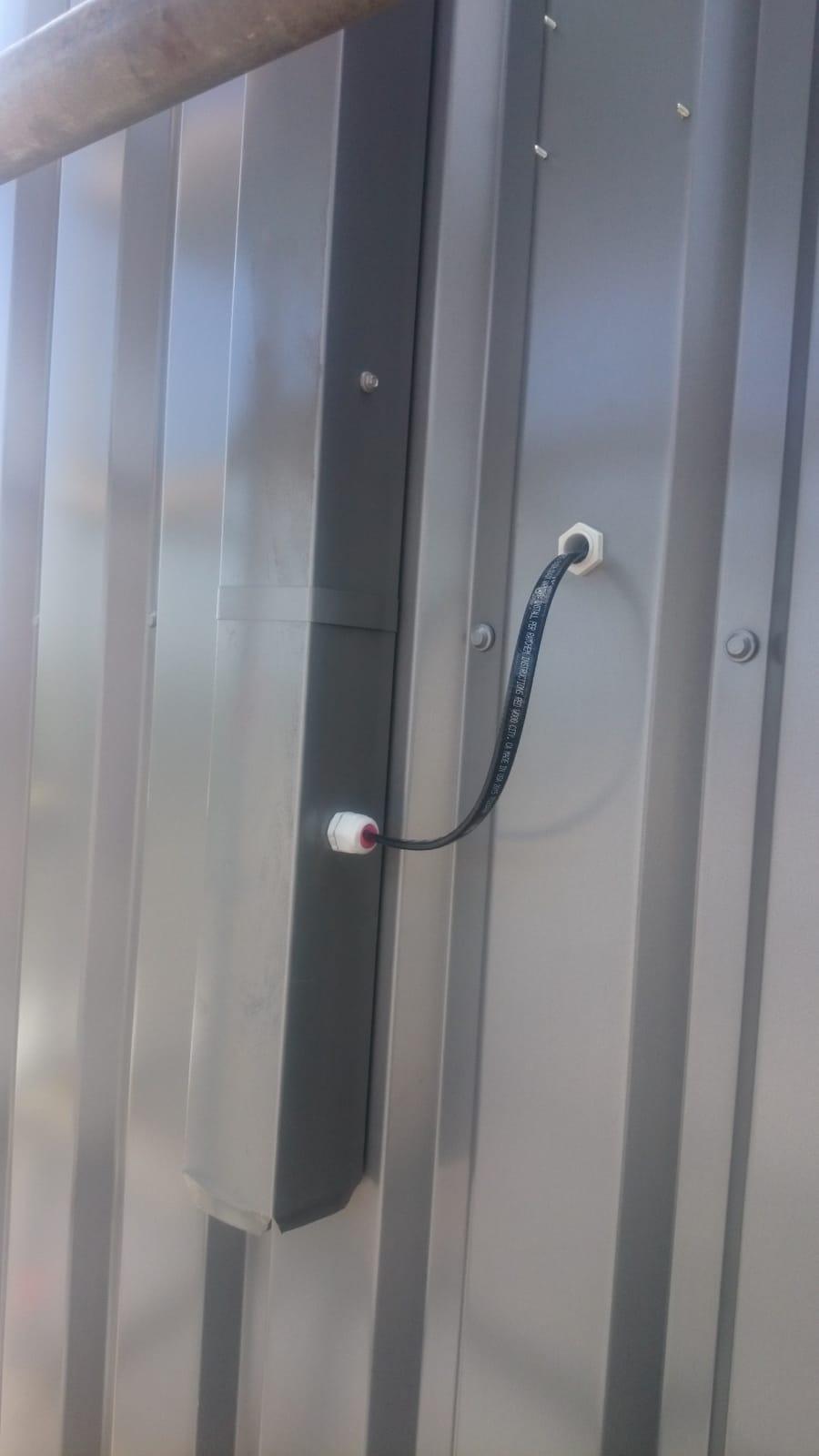
- In downpipes: we use metal chains on steel crossbars that relieve strain on the cables and improve heat distribution along the full length of the pipe.
- At roof edges: we protect areas particularly prone to snow overhangs and snow pockets.
Which heating cable for gutters?
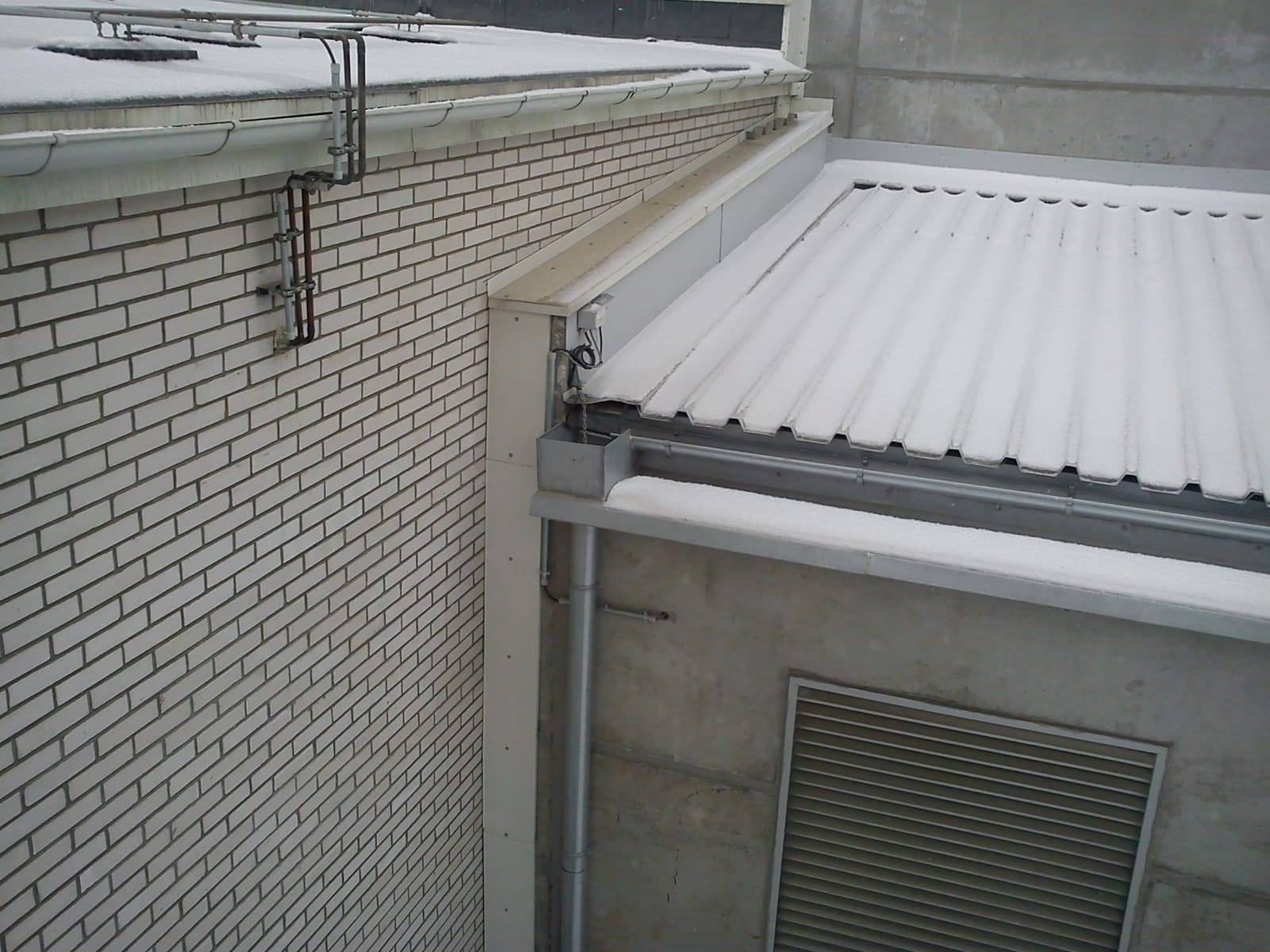
For gutters and downpipes we most often use self-regulating cables. They adjust their output to conditions: in water and snow they deliver more heat, and in the dry, warmer part of the gutter less, so they do not overheat even where cables cross in outlets and roof valleys.
- Standard gutters: one run of cable along the gutter.
- Wide gutters and roof valleys: two runs of cable or a higher output per metre.
- Downpipes: cable run down to the outlet and, where water is drained underground, also below the frost line.
Sizing the output: cold roofs vs warm roofs
- Cold roofs (well insulated): snow melts mainly due to the sun. They require a standard heat output (30-40 W per metre of gutter).
- Warm roofs (poorly insulated): heat escaping from the building melts snow from below, causing ice to form quickly. We use higher output ratings.
„For roofs with combustible coverings (e.g. roofing felt, bitumen shingles) we use cables with a limited output per metre (max. 20 W/m), ensuring full fire safety.”
What determines the cost of gutter de-icing?
- Installation length: metres of gutters, downpipes, roof valleys and roof edges.
- Output and number of cable runs: depend on the roof type (cold or warm) and gutter width.
- Control: a thermostat or a controller with temperature and moisture sensors - energy consumption depends on it.
- Installation conditions: building height, roof access (aerial work platform), type of roof covering.
- Power supply: circuit routing and the distribution board.
Once we receive the roof plan and basic building data, we prepare a selection and a quotation covering materials, installation and commissioning.
How we deliver de-icing systems - turnkey
We select and deliver the de-icing system from start to finish under a single contract - with one point of responsibility for design, materials and installation:
- 1Assessment and selection - we analyse the roof type, the length of gutters and downpipes and the critical areas, and select the heating cable type and output.
- 2Design and control selection - we select a controller with temperature and moisture sensors so the system only switches on when there is a real risk of icing.
- 3Supply - we deliver self-regulating cables and UV-resistant mounting accessories.
- 4Installation - we lay the cables in gutters, downpipes and along roof edges, in compliance with fire safety requirements.
- 5Commissioning and handover - we commission the controls, check operation and hand over a system ready for use.
Gallery - Roof and gutter de-icing
Selected installations from our portfolio. Click a photo to enlarge it.
Frequently asked questions
Do you design and install, or only supply materials?
+
We deliver de-icing systems as a turnkey service: selection, choice of weather-based controls, supply of cables and accessories, installation and commissioning. We can also supply materials only, with engineering selection, if you carry out the installation yourselves.
Does gutter de-icing switch on automatically?
+
Yes. We use weather-based control - a controller with temperature and moisture sensors switches the heating on only when there is a real risk of icing (frost and moisture at the same time). As a result, the system does not run unnecessarily and energy consumption is reduced.
What heat output is used per metre of gutter?
+
As a guide, 30-40 W per metre of gutter for well-insulated (cold) roofs; for warm roofs, where snow melts from below, higher ratings are used. The final selection depends on the roof type, covering and location - we prepare it individually.
Can de-icing be installed on a roof covered with roofing felt or shingles?
+
Yes. For combustible coverings (roofing felt, bitumen shingles) we use cables with a limited output per metre (up to approx. 20 W/m) and an appropriate installation method, ensuring fire safety.
How much electricity does gutter de-icing use?
+
Thanks to weather-based control and self-regulating cables, the system only runs when there is a risk of icing and delivers as much heat as needed. Actual consumption depends on the installation length, roof type and the course of the winter - it is much lower than with continuous operation.
How much does gutter and downpipe de-icing cost?
+
The cost depends on the length of gutters and downpipes, the roof type and covering, and the scope of work (supply, or design and installation as well). Once you provide basic building data, we will prepare a selection and a tailored quotation.
Do you install gutter de-icing on private houses?
+
We specialise in commercial, industrial and public buildings: industrial halls, warehouses, logistics centres, schools, hospitals and residential blocks managed by housing associations. For these we handle the whole project, from selection to commissioning and service.
We will find the right solution
for your installation
We usually prepare quotations within 24 hours. Talk to our specialists - we will advise free of charge and select a heat tracing system that fits your requirements. Enquiries in English are welcome.
- Free technical consultation
- Power output and complete accessory selection
- Backed by 30+ years of experience